
Places around
Tago, the Adjaran cable car village in Georgia: the 2026 guide
Updated 11 October 202626 min readPrices and facts checked: September 2026
Tago is a village of about 70 families at 1,000 to 1,200 m across the gorge from Khulo in mountainous Adjara, 92 km from Batumi. Its famous cable car has not run since 2024, so here is how you actually get there now, what it costs, where to stay and eat, and what the rebuild really looks like.
On this page+
- Where is Tago, the Adjaran cable car village?
- Is the Khulo-Tago cable car working in 2026?
- What exactly was the Khulo-Tago cable car, and what replaces it?
- How do you get to Tago now?
- Tago nowadays: who lives in the village?
- Where do you stay in Tago?
- Where do you eat in Tago and Khulo?
- What is there to do around Tago?
- When should you come to Tago?
- What should you sort out before you go?
- What does a trip to Tago cost in 2026?
- What people get wrong about Tago
- Questions people ask
Map of the places in this guide
Zoom with + and - or by pinching. Click the map first to zoom with the mouse wheel.
- 1Khulo-Tago cableway (lower station, Khulo)
- 2Upper Cable Station Tago
- 3Khulo Tourist Information Center
- 4Spar Partner Khulo
- 5Glamping Tago (also here: Yurtalicious)
- 6Oda
- 7Rima's Village Home
- 8Hotel Khulo Inn
- 9Hotel Posta Khulo
- 10Hotel Ambassadori Goderdzi
- 11Hotel Chateau Chao
- 12Hotel Toma
- 13Skhalta Monastery
- 14Sherif Khimshiashvili house-museum
- 15Khulo Mosque
- 16Goderdzi Pass
- 17Goderdzi Alpine Garden
- 18Beshumi
- 19Zarzma Monastery
- 20Dandalo Bridge
- Batumi to Village Tago by car · 92.4 km
- Khulo cable car station up to Tago by 4x4 · 8.6 km
Where is Tago, the Adjaran cable car village?
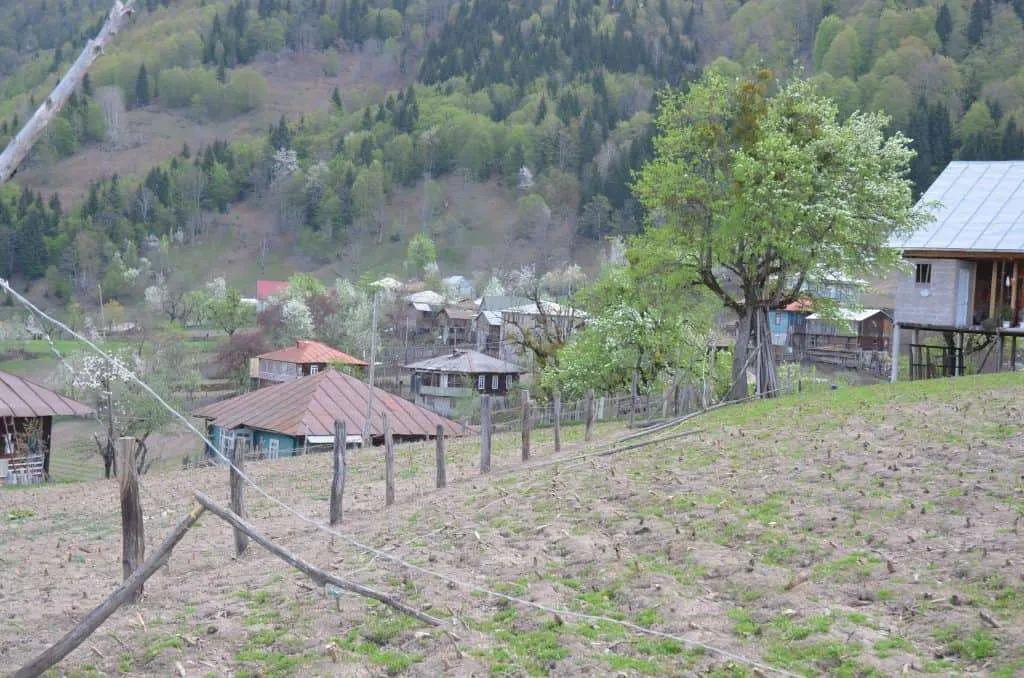
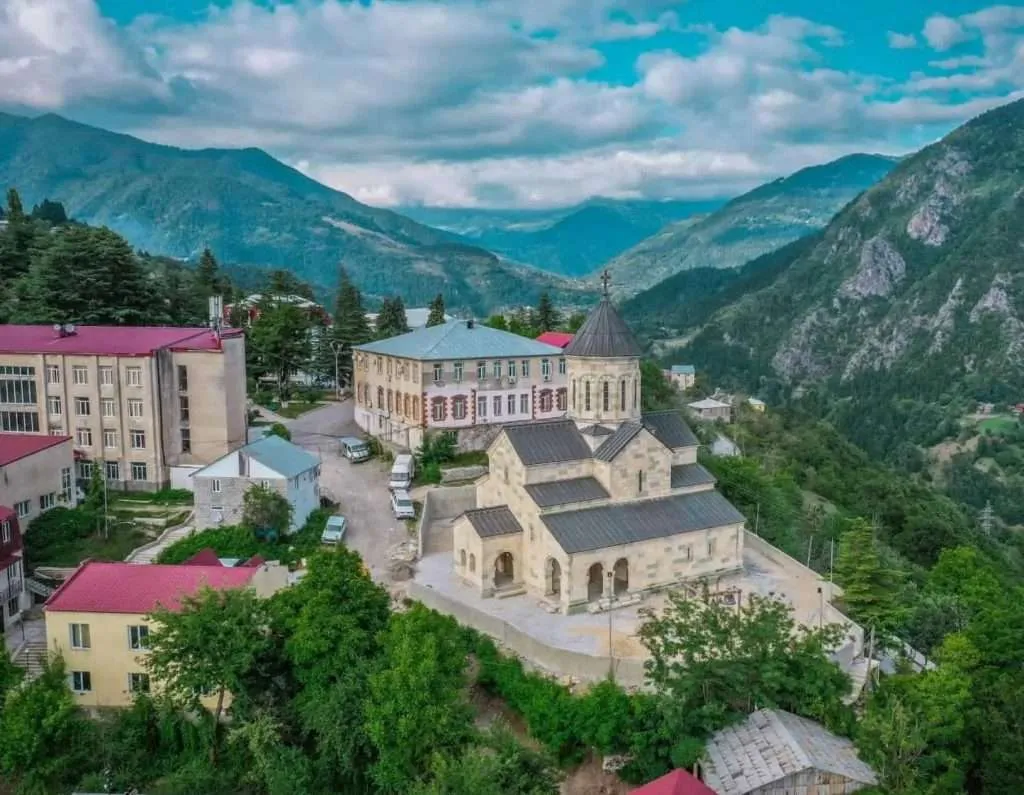
Tago is a village of about 70 families on the left bank of the Adjaristsqali river, 7 km from the town of Khulo in mountainous Adjara, in the southwest corner of Georgia the country. The centre of the village sits at 1,000 m and the top, where Glamping Tago is, at 1,200 m. Batumi is 92 km and two and a half to three hours away by road. Tbilisi is on the far side of the country.
Everything about Tago follows from the gorge in front of it. Khulo is a kilometre and a half away in a straight line and 8.6 km by mountain road, and for forty years the way across was a single cable car cabin that made the crossing in eight minutes. That cable car has not run since 2024. Walking round the gorge instead is 8.1 km and two to three hours.
The village is Muslim and Georgian, grouped around a mosque whose minaret you can see from Khulo's main square across the valley. Wooden oda houses and maize cribs stand along the road, the cattle go up to the high pastures every summer, and the Adjara tourism department calls the road up to the village badly damaged and the cable car decisive for the village. That is why the cable car mattered so much here.
Is the Khulo-Tago cable car working in 2026?
No. The Khulo-Tago cable car has been out of service since 2024 and 2026 is its third season without a ride. There is no reopening date, and the Adjara government has neither announced a construction tender nor finished a project proposal.
A scheduled inspection in 2024 found defects in the main hauling rope, and Khulo city hall judged further safe operation impossible. The 2024 inspection recorded wire breaks at six per lay, outer-layer wires worn past the limit and a rope diameter reduced past the limit. The track rope was due for replacement too, after forty years in service.
The line will not come back in its old form. Emzar Abuladze, director of the managing company, says the existing cable car was beyond restoration and unsafe, so the decision was to buy a new one. The operator is a Khulo city hall non-profit, A(A)IP Khulo-Tago Bagirgza, and the municipality does not have the money for that on its own.
Several official listings still carry a live fare and opening hours for the ride. Visit Ajara marks it "Under construction" in English and "Repair works" in Russian, with the old 5 GEL fare and hours of 09:00 to 18:00 beside it, and GoBatumi prints working hours of 08:00 to 20:00 with a break. Book nothing on the strength of those listings.
What exactly was the Khulo-Tago cable car, and what replaces it?
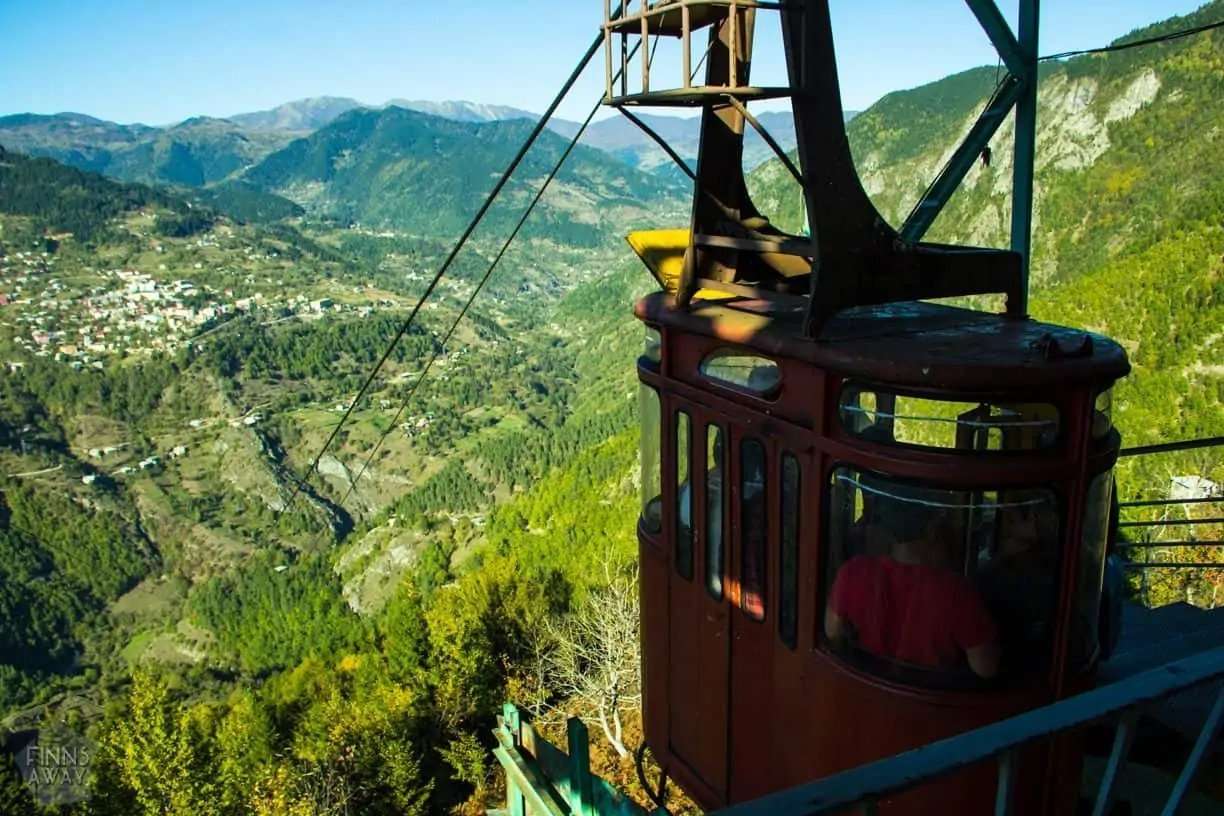
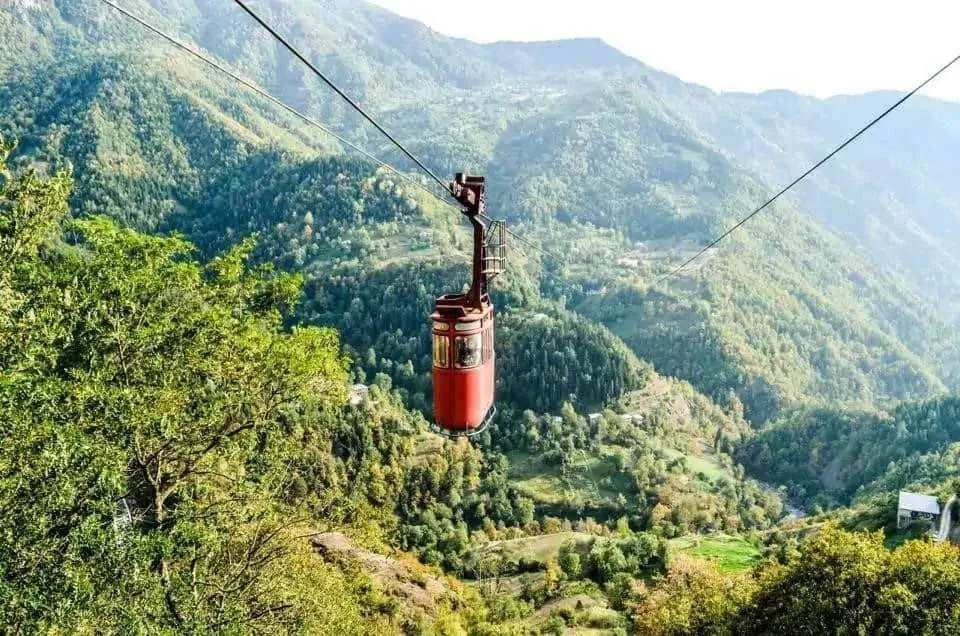
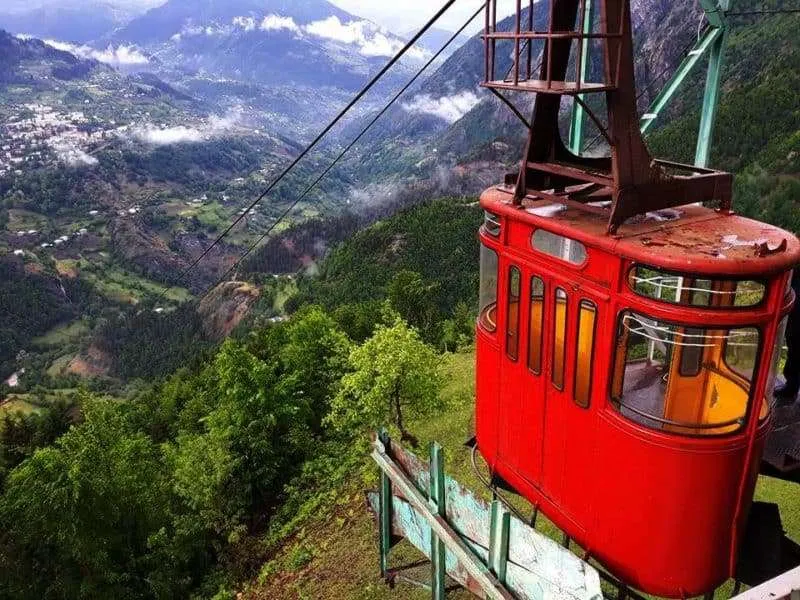
It was a single cabin on a 1,720 m span with no intermediate pylon at all, hanging up to 280 m above the Adjaristsqali gorge. It opened in 1985 after six years of building, to a design by the architect Shota Orjonikidze, and Khulo city hall ranks it second in Europe for the length and height of an unsupported span. The record holder is the Seilbahn Zugspitze in Germany, whose free span is 3,213 m.
| The old line | Figure |
|---|---|
| Opened | 1985, built from 1979 |
| Unsupported span | 1,720 m, no intermediate pylon |
| Height above the gorge | 280 m |
| Crossing time | 8 minutes, against half an hour by road |
| Cabin | One cabin for 10 passengers |
| Fare until Sept 2022 | 20 tetri for everybody |
| Fare from Sept 2022 | Free for locals, 5 GEL for visitors, cargo chargeable |
| Hours | 09:00-18:00 |
| Villages served | Tago, Chao, Dzmagula and Pachkha: over 180 households |
| Upkeep | 98,700 GEL a year to Khulo city hall |
The figures in the rebuild's own technical documents are 1,720 m and 280 m. Pages that give a span of 1,919 m, or a height of 330 or 350 m, are out of date: the national tourism site georgia.travel still prints 350 m, and GoBatumi 1,700 m and 350 m.
This was never only a tourist ride. It was the villagers' link to Khulo for school, shopping and the market, and the way cargo crossed the gorge. From 6 September 2022 locals rode free, visitors paid 5 GEL, and carrying cargo became chargeable; people working in the village, mostly the teachers, kept travelling free. It also stopped often even when it ran: wind and fog halted it regularly, and the cabin got stuffy in summer when it was full.
What the replacement is meant to be
The technical assignment keeps the thing that made the line famous: the documents require that the pylon-free principle be preserved, while both station buildings come down and are rebuilt. The specification is a reversible line with a gondola for at least 10 passengers or 5 passengers plus bicycles, a minimum speed of 5 m/s, the drive at the Khulo station, room to add gondolas later, and an independent rescue system with its own power supply. Khulo station is to get a foyer with an exhibition on the line's history, possibly the old cabin. Tago gets a viewing platform and a food and rest block of at least 80 m2.
The money and the timeline are the weak part.
- 200,000 GEL was allocated for a pre-design study, first in the 2025 Adjara budget with a January 2026 deadline, then carried into 2026.
- Restoring the old line was costed at a minimum of 5 million GEL in May 2025.
- 5.4 million GEL, about 2 million USD, was allocated for a brand new line in June 2025 by Adjara finance minister Jaba Putkaradze.
- The rebuild sits inside a 1,368,000 GEL urban development sub-programme alongside Chirukhi mountain, the Goderdzi ski resort and the Zankebi-Goderdzi road.
- The contract is to be awarded Design-Build, so the real price is only known once the winner has produced the design documentation.
Market research closed in September 2025 with six developers taking part, from Austria, France, Switzerland, Italy and Georgia, and most of them preferred a two-gondola, 10-seat reversible line to the single-gondola line in the ministry's own assignment. A further round ran in July 2026, bundling Khulo-Tago with a new Goderdzi resort line. The finance and economy ministry's own budget report says selecting a contractor went badly because the local market barely covers the supply of such structures, and that this is a high-risk object whose safety solutions have to be worked out to a high standard.
Meanwhile the line's own history shows how long these things take. A December 2019 inspection found rope breaks, the cable car stopped in January 2020, LLC Bagirmsheni replaced all 3,400 m of rope for 124,723 GEL and it reopened that August. In 2020 and 2021 a total of 237,000 GEL went into the line while it ran, and 112,512 GEL more went on the cabin and a generator in 2022. The last job before the shutdown was a 39,672 GEL tender in November 2023 for the cabin's running gear. The old hauling rope, 3,600 m of it, was sold at auction for 1,290 GEL.
Staying in the Adjara mountains? See the glamping in Tago village
How do you get to Tago now?
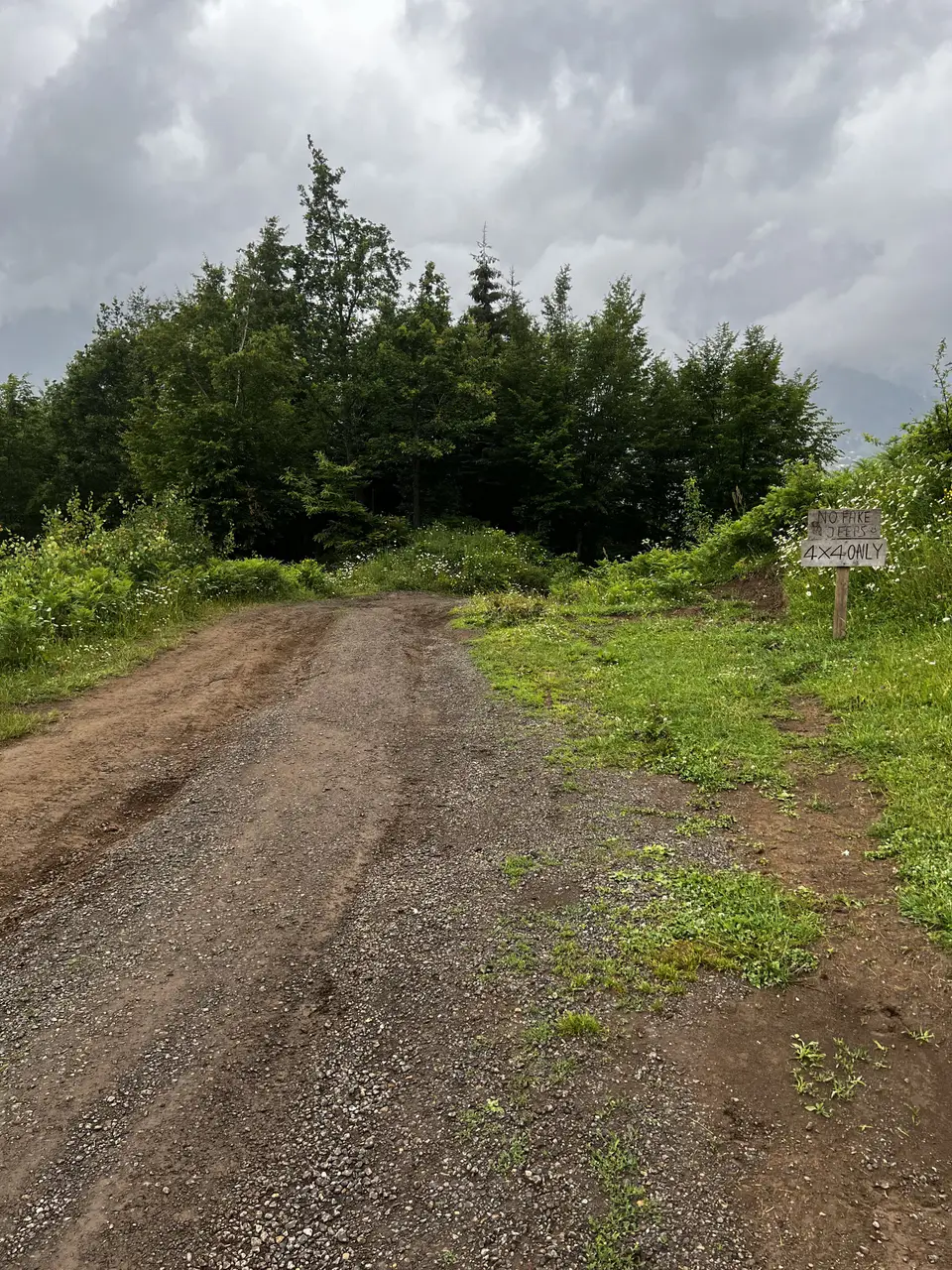
You drive, and the last stretch is the hard part. From Batumi it is 92 km to the top of the village: 86 km of asphalt on the S1 Batumi to Akhaltsikhe road as far as Khulo, then 8.6 km of mountain road that climbs from 875 m to 1,200 m. A normal car is fine as far as Khulo. The climb to Tago needs a real 4x4.
| Leg | Distance | Time | Road |
|---|---|---|---|
| Batumi to Khulo | 86 km | 2 to 2.5 hours | Asphalt the whole way |
| Khulo to Tago via the iron bridge | 8.6 km | 30-35 minutes | Mountain road, 4x4 only |
| Khulo lower station to Tago upper station on foot | 8.1 km | 2 to 3 hours | Roads and paths round the gorge |
| Tago upper station to the top of the village on foot | 0.6 km | 9 minutes | Path, no car |
The turn for Tago leaves the main road a little before Khulo. It drops to the river, crosses an iron bridge and climbs the far side in zigzags. Our own route guide walks through it turn by turn: use Maps.me, open the Tago pin and follow the wooden Glamping Tago signs, because other map apps send drivers to Chao. In Khulo, stairs lead down from the centre to the walking path across the gorge.
The 4x4 taxi from Khulo
This is what almost everyone does. Taxis wait in the parking area at the Khulo cable car station, and the ride is 75 GEL per car for up to four people, 30 to 35 minutes, with no fixed hours. Late arrivals are normal: if you reach Khulo at 20:00 there is still a car. Glamping Tago sends one on WhatsApp to +995 555 56 24 83, and it is worth messaging about thirty minutes before you reach Khulo, because the mountain road has long stretches with no signal.
Can you get there without a 4x4?
Yes, by the longer way. Instead of turning off just before Khulo, turn off the Batumi to Akhaltsikhe road at Zamleti, 4.7 km before Khulo, and follow the Skhalta valley south. In Cheri, before you reach Skhalta Monastery, take the road uphill, then climb through Dzmagula and Samtsukhi to Tago. It is about 94 km from Batumi and roughly two hours, a little longer than going through Khulo, but the road is easier and it suits normal cars and minibuses. It is still a mountain road, so drive it slowly.
If your car is a city car and you are coming via Khulo, park anywhere in Khulo centre and take the taxi up. Rental jeeps in Georgia are often not four-wheel drive at all, so check the car before you rely on it.
By marshrutka and taxi app
Marshrutkas to Khulo leave Batumi's old bus station on St Severian Achareli street, also written 1 Mayakovsky St, every 30 minutes from 08:00 to 20:00. The trip is about 2h30 and about 10 GEL, the windscreen sign reads ბათუმი - ხულო, and the minibus stops halfway for food and a toilet. From Khulo, take the 4x4 taxi.
Bolt, Yandex and Maxim reach Khulo in about two hours for up to 175 GEL. No app car does the last stretch to Tago, and drivers going up often ask more than the app price because they have no return passenger.
Coming from further away, everything routes through Batumi. From Kutaisi: marshrutka 3 hours and 20 GEL hourly from 08:00 to 18:00, the train from the airport 2 hours and 31 GEL four times a day, the bus 2 hours and 25 GEL. From Tbilisi: the train 6 hours and 35 GEL, the marshrutka from Didube 7 hours and 35 GEL hourly from 07:00 to 16:00, the bus from Ortachala 6h30 and 40 GEL.
Tago nowadays: who lives in the village?
About 70 families, and fewer every year. The censuses put Tago at 366 people in 2002 and 294 in 2014, split 150 men and 144 women and recorded as 100% Georgian. The national tourism agency says 70 families; Visit Ajara and our own older pages say 60. Numbers swing with the season, because many families now live in the city and come up in spring to work the land.
The clearest measure of what has happened since 2024 is the school. Tago's school opened the 2026-27 year with no pupils at all, against twelve the year before, whose parents moved them to schools elsewhere. The building keeps its administration. Khulo council member Roman Kedelidze links the migration directly to the cable car stopping and to the state of the bypass road: light cars struggle, you need a jeep, and a taxi is expensive because the road is so bad.
Population, education and religion
Khulo municipality as a whole holds 23,327 people over 710 km2, in the town plus 78 villages, and Khulo town itself 1,007. This is the part of Adjara where Islam is the main religion, and Tago is a Muslim village: the call to prayer carries across the whole settlement five times a day. Khulo town has an old wooden mosque from the late 19th century, still in use.
The village is old. The Great Register of the Liva of Upper and Lower Adjara, compiled under Sultan Selim II, lists five households in Tago paying 5,000 akce in tax, and iron ingots found on the village's territory suggest it was one of the area's early iron-working centres, according to Georgian Wikipedia. Under the Soviet Union it belonged to the Oktomberi village council and tobacco was its main crop.
Flora, fauna and what the gardens grow
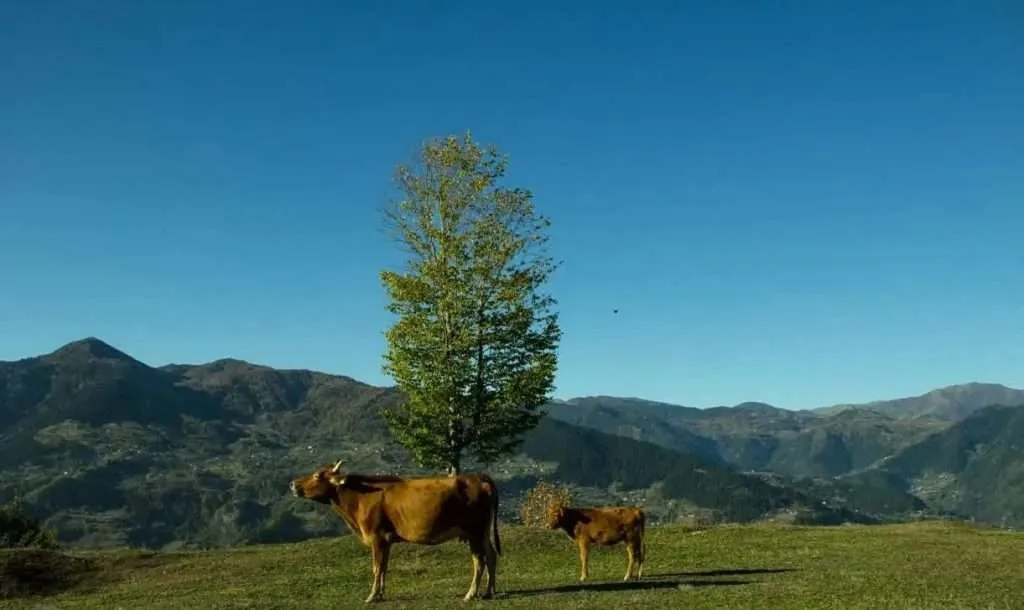
Summer is transhumance. The cattle go up to the high pastures, families plant potatoes, cut hay and make dairy for the house and for sale, some of it at the Beshumi summer resort over the pass. Kaimagi, a thick soured cream skimmed from the morning milk, becomes butter; the rest of the milk becomes cheese and curd. Khulo's soil and climate make its potatoes the ones Georgians rate highest in the country.
The gardens carry the rest of the year. Strawberries, cucumbers, tomatoes, radish, raspberries, apples, pears, cabbage, potatoes and corn come in through summer and autumn; sweet cherries, mulberries, plums, green beans and cranberries are summer only; black beans come in autumn. Households also pick and dry wild herbs and berries for sale, which the Alliances Caucasus Programme follows in Tago as one of the few cash incomes in the village, alongside dairy and potatoes. Collectors and processors buy the dried material from the houses.
Tobacco is the other thread. It has been grown in Adjara since the 1890s, and while the coastal strip went over to tea, nearly every house in this valley still has leaves hanging to dry and there are tobacco stalls on Khulo's main square.
Spruce, fir and beech forest runs up behind the village. Bears, wolves and jackals live in it, and people here are used to them rather than afraid of them.
Where do you stay in Tago?
There are two places to sleep inside the village itself, plus seven family houses that keep rooms for guests. Everything else is down in the Khulo valley.
Glamping Tago
Where: the top of the village at 1,200 m, 8.6 km above Khulo. Drive time from Batumi: 2.5 to 3 hours. Capacity: 12 Lotus Belle tents for two plus a nine-bed dome dorm, 33 beds. Price from: rates change with the date, so check today's prices. Season: 1 April to the end of October. Good for: a base with hot showers, Starlink wifi, a vegetarian kitchen, a wood-fired sauna and five documented walks from the gate. Watch out for: the last 8.6 km needs a 4x4, and we close for the winter.
Oda
Where: N9 Aghmashenebeli 3rd blind alley in Tago, at 1,164 m. Distance: 0.3 km and about 5 minutes on foot from the glamping. Capacity: a small family guesthouse. Season: ask when you call. Good for: a bed in the village itself. Watch out for: there is no website and no online booking, so you arrange the room by phone or WhatsApp, and few of its Google reviews have any text.
Family-type home-stays in Tago village
Seven families in Tago keep rooms for guests: 27 rooms and 64 beds between them, three to ten minutes on foot from the glamping, plus about 60 camping spots in the house gardens. The houses are Otari, Irina, Maria, Dali, Gulnazi, Marina and Nodari. These are family homes with a room or a floor kept for guests, not hotels: bathrooms are usually shared and every house has a balcony or a terrace. Rooms and prices are on our village guesthouse page, where you pick dates and pay online and the room is held straight away. Together with the glamping's 33 beds, that is how a group of a hundred sleeps in Tago.
Rima's Village Home, Vashlovani
Where: Vashlovani in the Khulo valley at 961 m, in the same administrative unit as Tago. Distance: 8.7 km and about 16 minutes from Tago by road, and on the way up from Batumi, where it adds 1.7 km to the drive. Capacity: 5 rooms, 12 beds. Season: all year. Good for: three meals a day cooked in the house, wifi, parking, a sauna and a barbecue, with Good Host status from the Adjara tourism agency since 2024. Watch out for: it is down on the valley floor, so Tago is still a climb in the morning.
Hotel Khulo Inn
Where: Ganakhleba, beside Khulo, at the Twelfth Road N10. Distance: 2.2 km off the Batumi to Tago drive, three minutes of detour. Capacity: a family-run traditional oda-style wooden house. Season: all year. Good for: homemade breakfasts of local cheese, khachapuri, eggs and fruit, balcony views over the gorge and small new rooms, run by Lasha Bolkvadze and his family. Watch out for: booking runs through the phone, WhatsApp or khuloinn@gmail.com.
Hotel Posta, Khulo
Where: 7 Tbel Abuseridze street in the centre of Khulo. Distance: walking distance from the bus station, the banks and the pharmacies. Season: all year. Good for: the obvious bed if you reach Khulo too late to go up, or if you want to see the town first. Watch out for: no website and no Instagram, only the phone, and the hostess speaks little English but puts someone on the line who does.
Hotel Ambassadori Goderdzi
Where: at the Goderdzi ski resort at 1,699 m, on the far side of Khulo. Distance: 34 km and about 45 minutes from Tago. Capacity: a full hotel with a ski lift at the door. Season: all year, which matters because Tago closes in winter. Good for: an indoor pool, spa, sauna, outdoor hot tubs, gym, ski rental and snowmobile tours. Watch out for: it is a large resort hotel you share with other guests, and Tago is a 45-minute drive each way.
Two more places are worth naming, for opposite reasons. Hotel Chateau Chao is in Chao, the village maps confuse with Tago, and carries 5.0 from only 16 Google reviews, under the 20-review bar we use. Hotel Toma in Khulo sits at 3.9 from 51 reviews, under the rating bar.
Where do you eat in Tago and Khulo?
There is no shop and no cafe in Tago village. Buy food in Khulo before you go up, or eat where you sleep.
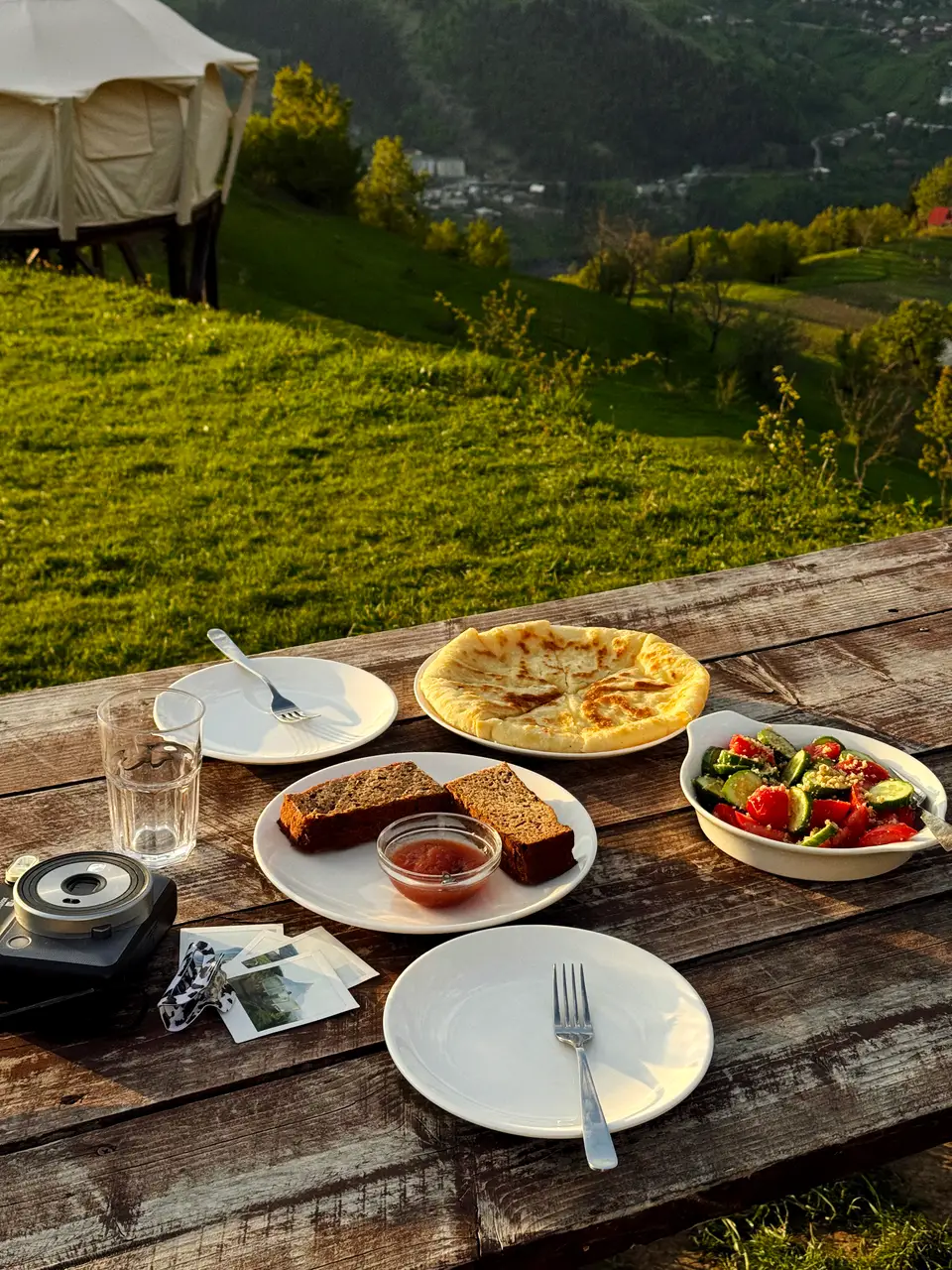
Yurtalicious, the restaurant at Glamping Tago
Our own yurt restaurant at the top of the village, fully vegetarian, local and European, cooked fresh each morning by women from the village. Breakfast is a buffet from 09:00 to 11:00 at 32 GEL, lunch is a la carte from 13:00 to 16:00 with Georgian salads, sinori and Adjaran khachapuri, and dinner is a buffet from 19:00 to 21:00 at 37 GEL. It seats 24 at the long table and up to 32 with extra tables. Day visitors and hikers are welcome, and book a table ahead, because everything is cooked to the number of people expected.
Cafe Levon's, Khulo market
Cafe Levon's is the family kitchen in the Khulo market, 4.8 from 76 Google reviews, open every day from 10:00 to midnight. Gulash, khinkali and khashlama are what people order, and four people eat for 32 to 60 GEL including a litre of homemade wine. There is no phone to book, and the sign is not visible from the road, so ask in the market.
The regional dishes to look for anywhere in Adjara are Adjaran khachapuri, the boat-shaped one with egg and butter, achma, which layers like lasagne, sinori, made from lavash with curd and butter, and borano, soft cheese under melted butter.
What is there to do around Tago?
The walking starts at the door and the driving starts at Khulo. Five routes are documented from the glamping gate: a two-hour village walk, two hours to the Lonely Tree on the ridge, two hours to the Green Hill, four to six hours to Otsinari lake, and four to six hours down to Skhalta Monastery. You can walk them yourself for free, and our own hiking pages carry the maps; reception lends them and will match a route to your group. A guide is 150 GEL for a half day and 200 GEL for a full day.
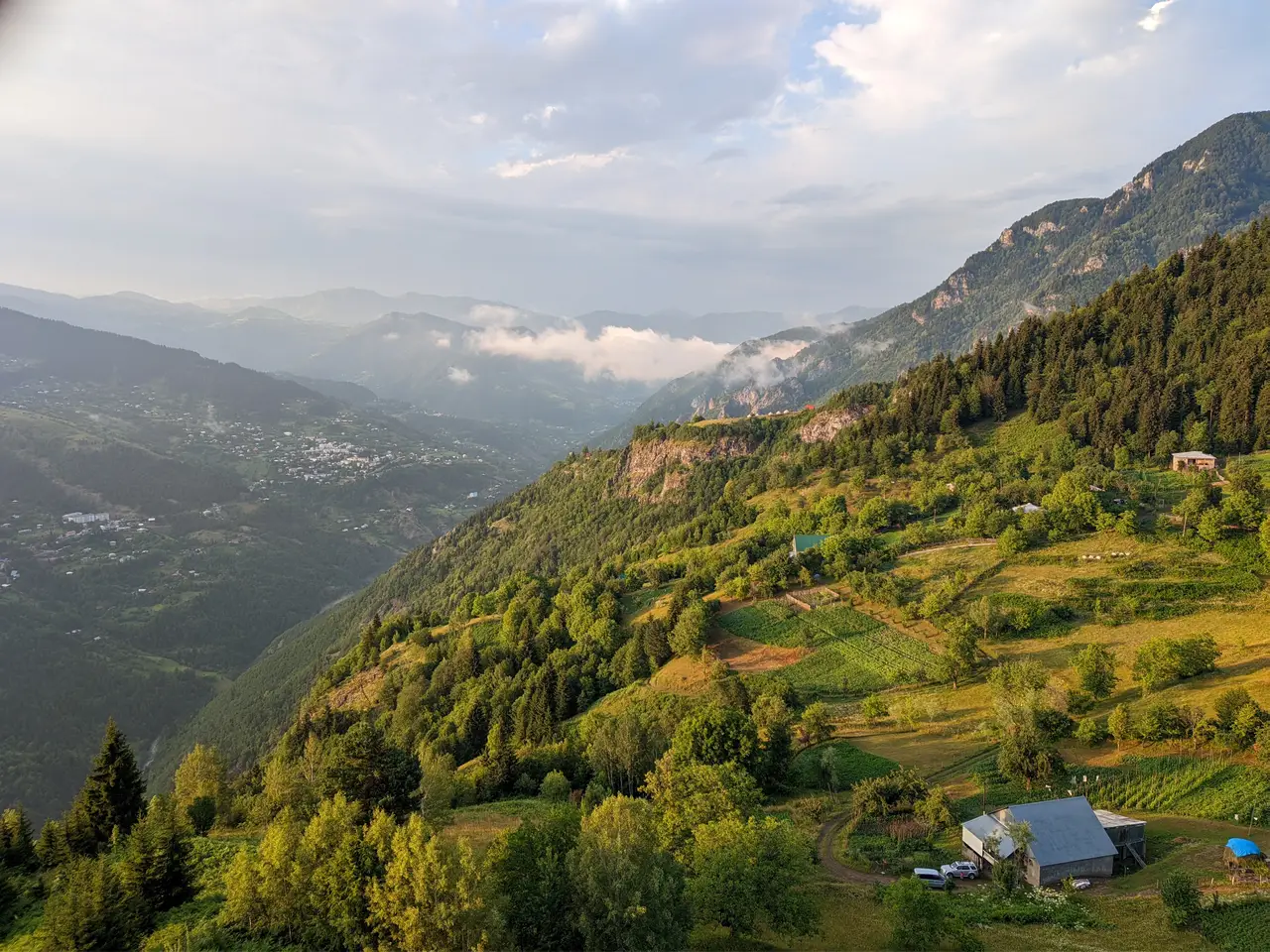
The viewpoint above the village
From the old cable car station, the marked path runs 1.2 km to a small meadow on the right with a panorama of Khulo, the neighbouring villages and the gorges, described on the Adjara tourism agency's Tago-Skhalta route. Higher up, the Argineti ridge rises behind the village. The agency's one-day Khulo-Tago-Argineti route crosses it, but that one is unmarked, blocked by landslides in places and for late spring to early autumn only.
Skhalta Monastery, as its own half day
Skhalta is not a stop on the way to Tago. Routing a Batumi to Tago drive through it adds 13.5 km and 33 minutes and takes you into a different valley. Treat it as its own trip: 9.5 km and 22 minutes by road from Tago, or the 7.5 km marked path, which our own route notes make a 4 to 6 hour day with 607 m of climbing on the way back, yellow markers the whole way and phone signal throughout.
The church is a large hall church of the mid-13th century with fragments of 14th and 15th century wall painting. It is the only medieval church in Adjara to survive both the Ottoman and the Soviet periods, active again since 1990, and the seat of the bishop of Skhalta. Entry is free and it is open 09:00 to 19:00 daily. Marshrutkas run Batumi to Skhalta at 09:00 and 15:00 each way for 5 GEL.
The house-museum of Sherif Khimshiashvili, the last ruler of Upper Adjara, stands 700 m from the monastery by road and right at the end of the marked path from Tago. It keeps Monday to Friday 09:00 to 17:00 and is closed at weekends.
Khulo town
Khulo is where the shops, the market, the banks and the pharmacies are, and it is worth an hour while you wait for a car. The old wooden mosque is still in use; you go inside with the local imam's permission.
Over the Goderdzi Pass
East of Tago the road climbs to the Goderdzi Pass at 2,056 m, 38.8 km and about 52 minutes away. The Goderdzi Alpine Garden, run by Batumi Botanical Garden, is 3 km past the pass and 41 km from Tago: 170 wild species from 111 genera across 96,344 m2, between 1,859 and 1,960 m, with a rock garden, a spring-fed lake, a picnic area and a camping area. Entry is free, it opens 09:00 to 20:00, and it is at its best from 15 May to 15 October. Beshumi, the summer resort village between 1,850 and 2,000 m where Tago families sell their dairy, is 44.9 km from Tago and genuinely on the road over the pass; its Shuamtoba festival, with crafts, dances and horse races, falls on the first weekends of August. Minibuses run Batumi to Beshumi for 15 GEL and Khulo to Beshumi for 6 GEL, in season only.
Carrying on east, the Khulo to Zarzma road is 47 km of which 44 are asphalted; the last 3 km are planned for 2027, one landslide section still needs its own engineering study, and the Roads Department says it will buy winter machinery so the Akhaltsikhe side stays open through the winter. Zarzma Monastery is 56.5 km and about 80 minutes from Tago, on the far side in Samtskhe-Javakheti.
Other day trips from the village
Six day trips start in Tago on our own tours page: Green Lake and Beshumi over the pass, a jara honey tasting and feast at Mindia's, Ghorjomi and its wooden mosque, Uchkho canyoning with ten waterfalls, Khikhani Fortress and the Shuamta lakes at 2,150 m. Green Lake has its own full guide. Around the glamping there is morning yoga and an evening campfire included with a stay, plus a wood-fired sauna, a foraging walk with a local herbalist, a khachapuri workshop, a movie night and a painting session, all on our activities page.
Two more valleys are worth the drive from Khulo. Uchkho is 6.8 km of asphalt from the town centre, then 600 m of asphalt and about 2 km of dirt best done in a 4x4, then a forest path to a 17 m waterfall; the whole route is 10 km and about eight hours, and the village also has a 12th-century stone arched bridge. Ghorjomi is about 12 km from Khulo, with the largest wooden mosque in Georgia, five-domed, in the village centre, and a four-step waterfall cascade of about 13, 14, 16 and 19 m.
Khikhani Fortress is a separate day again, and the most demanding. It stands at 2,236 m above Zedatkhilvana, 112 km from Batumi and 44 km from Khulo, and was the seat of the Abuserisdze family from the 11th to the 16th century. In 1815 Selim Khimshiashvili, pasha of Akhaltsikhe, held out here against an Ottoman army; the fortress fell on 3 June and he was captured and beheaded. The drive reaches the foot of the crag and the last kilometre is on foot, 254 steps with staircases in the steepest sections, 30 to 60 minutes up.
On the way up from Batumi
Only one stop is genuinely on the road. The Dandalo arched bridge sits right beside the S1 at 60 km from Batumi, so adding it costs no distance and no time. It is a medieval stone arch 7.6 m above the water, dated by the Adjara tourism agency to the 9th to 11th centuries.
When should you come to Tago?
June to September is the reliable window, and September is the best single month for the roads. The last stretch up to the village needs a 4x4 in any month and can shut after rain or a landslide.
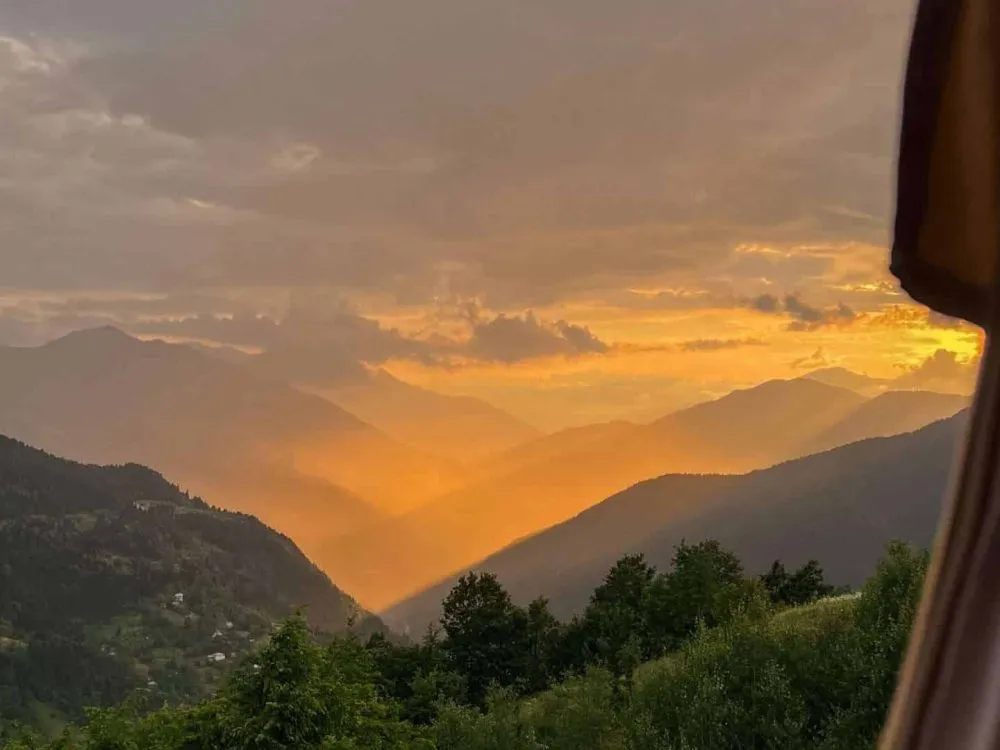
| Month | What to expect |
|---|---|
| April to May | The glamping opens 1 April. The Tago road is possible but unreliable; snow can still sit on the higher ground |
| June | The road settles. Rain and fog are at their most frequent |
| July | Warm days, the high pastures in full use, Beshumi filling up |
| August | The hottest and clearest month, average high 23C and low 13C; Shuamtoba at Beshumi in the first weekends |
| September | The best driving month: clear air, quiet roads, the harvest and the tobacco curing |
| October | Autumn colour, cold nights, the glamping closing at the end of the month |
| November to March | Snow closes the higher villages, the Goderdzi Pass is closed or restricted, and November is the wettest month at about 112 mm |
The warm season in Khulo runs from 5 June to 21 September with average highs above 19C, and January is the coldest month with an average high of 2C and a low of -6C. Before a shoulder-season trip over the pass, call the Roads Department of Georgia on +995 32 2 31 30 76.
What should you sort out before you go?
Four things: a bed, a car up, cash, and warm clothes.
- Book the bed first. Glamping Tago takes dates on the booking engine, and the village rooms are booked and paid online on our village page. In July and August the village fills up.
- Book the car up second. Message the camp on WhatsApp at +995 555 56 24 83 with the day and roughly when you will reach Khulo, then message again about thirty minutes out. There is no shared shuttle.
- Carry cash, but not only cash. Khulo has banks, ATMs and shops; Tago has none. The glamping takes cash and card, the village houses are paid online, and the 4x4 drivers want cash.
- Pack for a mountain. Warm days and cold nights, even in August. Bring layers, rain gear and shoes you can walk a wet track in. Weather apps show Khulo, 300 m lower and across the gorge, so they are a rough guide at best.
If it rains, and it does, the day still works: the restaurant, the sauna and the yurt are all indoors, Khulo's market and museum are half an hour down the hill, and Skhalta Monastery is a 22-minute drive. What rain does change is the road. After heavy rain the last 8.6 km can shut, so ask the camp or the Khulo Tourist Information Center before you set off.
What does a trip to Tago cost in 2026?
The village costs nothing to visit. Transport is the whole bill, and the gap between the marshrutka and a private car is wide.
2026 prices
| What | Price | Notes |
|---|---|---|
| Marshrutka Batumi to Khulo | about 10 GEL | Every 30 minutes, 08:00-20:00, 2h30 |
| 4x4 taxi Khulo to Tago | 75 GEL per car | Up to 4 people, 30-35 minutes, no fixed hours |
| Taxi app Batumi to Khulo | up to 175 GEL | Bolt, Yandex or Maxim; no app car goes on to Tago |
| Private 4x4 Batumi to Tago | 265 GEL per car | Up to 4 people, 2h30 |
| Private 4x4 Kutaisi to Tago | 465 GEL per car | 5h30 |
| Private 4x4 Akhaltsikhe to Tago | 360 GEL per car | 4h30, over the Goderdzi Pass |
| Private 4x4 Tbilisi to Tago | 925 GEL per car | 8h30 |
| Marshrutka Batumi to Skhalta | 5 GEL | 09:00 and 15:00 each way |
| Marshrutka Batumi to Beshumi | 15 GEL | Summer season only |
| Minibus Khulo to Beshumi | 6 GEL | Summer season only |
| Bed at Glamping Tago | today's prices | 12 tents for two and a 9-bed dorm |
| Room in a village guesthouse | on the village page | 27 rooms, 64 beds, book online |
| Breakfast buffet at Yurtalicious | 32 GEL | 09:00-11:00 |
| Dinner buffet at Yurtalicious | 37 GEL | 19:00-21:00 |
| Dinner for four at Cafe Levon's | 32-60 GEL | Including a litre of homemade wine |
| Hiking guide from the camp | 150 GEL half day, 200 GEL full day | The documented routes are free to walk alone |
| Skhalta Monastery | Free | 09:00-19:00 daily |
| Goderdzi Alpine Garden | Free | 09:00-20:00, best 15 May to 15 October |
| Khulo-Tago cable car | Not running | It was 5 GEL for visitors until 2024 |
Two people coming by marshrutka and sharing the 4x4 up spend 95 GEL between them to reach the village from Batumi. The same pair in a private 4x4 door to door spend 265 GEL.
What people get wrong about Tago
- That the cable car is running. It has not run since 2024, and several official and commercial pages still show live fares and opening hours for it.
- That it is 1,919 m long and 350 m high. The figures in the rebuild documents and the 2026 reporting are 1,720 m and 280 m.
- That Tago is near Tbilisi. It is in mountainous Adjara, reached from Batumi, 92 km and two and a half to three hours from the coast.
- That a rental jeep will do. Rental "jeeps" in Georgia are frequently not four-wheel drive. The 8.6 km above Khulo needs a real one, or take the taxi.
- That Chao is Tago. Maps apps send drivers to Chao, which is about 12 km away by road and a different village.
- That Skhalta Monastery is on the way. It is in a side valley. From Tago it is its own half day, by road or on the marked path.
- That there is a shared shuttle up. The old shared Khulo to Tago service no longer exists. It is the 4x4 taxi or your own car.
- That you can buy food in the village. There is no shop in Tago. The last one is the 24-hour Spar Partner about 100 m from the Khulo cable car station.
Glamping Tago for this
Glamping Tago as your base in the village
We are at the top of Village Tago at 1,200 m, the last buildings before the forest, and the only purpose-built place to stay in the village. You sleep in a Lotus Belle tent or the nine-bed dome, eat at Yurtalicious, our vegetarian yurt restaurant, and walk out of the gate onto five documented routes.
Getting up here is the part people ask about. Reach Khulo by marshrutka, car or taxi app, message us on WhatsApp about thirty minutes before you arrive, and our 4x4 taxi meets you at the cable car station for 75 GEL per car. Late arrivals are normal: there are no fixed hours. If you are driving a car that is not a real 4x4, park in Khulo centre and do the same, or come the longer Skhalta valley way.
Seven families in the village keep another 64 beds in 27 rooms, three to ten minutes from us, which is how groups larger than 33 stay in Tago. Morning yoga, the evening campfire and the wood-fired sauna are part of the stay.
- Where
- Top of Village Tago, Khulo municipality, Adjara, 1,200 m
- Beds on site
- 12 Lotus Belle tents for two plus a nine-bed dorm, 33 beds
- Prices
- They change with the date: see today's prices on glampingtago.ge/glamping
- Season
- 1 April to the end of October, closed for the winter
- Drive from Batumi
- 92 km, 2.5 to 3 hours: asphalt to Khulo, then 30-35 minutes by 4x4
- Transfer
- 4x4 taxi 75 GEL per car from Khulo, 265 GEL from Batumi, up to 4 people
- Food
- Yurtalicious, fully vegetarian: breakfast 32 GEL, dinner 37 GEL, seats 24
- Walks
- Five documented routes from the gate, free to walk on your own
Questions people ask
Is the Khulo-Tago cable car working in 2026?
No. It has been out of service since 2024 and 2026 is its third season without a ride. A 2024 inspection found wire breaks and excessive wear on the hauling rope, and the track rope was due for replacement after forty years, so Khulo city hall judged further safe operation impossible. Several official and commercial pages still show fares and opening hours for it, which is why people keep arriving expecting a ride.
When will the Khulo-Tago cable car reopen?
There is no date. The 1985 line will not run again in its old form and a new one has to be built: 5.4 million GEL was allocated in June 2025 and 200,000 GEL for a pre-design study, but with the line stopped since 2024, no construction tender has been announced and no project proposal is finished. Market research ran again in July 2026 and the ministry's own budget report says the local market barely covers the supply of such structures.
How do you get from Khulo to Tago village?
By 4x4, up 8.6 km of mountain road that climbs from 875 m to 1,200 m. Taxis wait in the parking area at the Khulo cable car station and charge 75 GEL per car for up to four people, taking 30 to 35 minutes with no fixed hours. Glamping Tago sends one on WhatsApp to +995 555 56 24 83. On foot around the gorge it is 8.1 km and two to three hours.
Can you drive to Tago without a 4x4?
Not by the direct road above Khulo, which needs a real four-wheel drive, and rental jeeps in Georgia often are not one. The way round is the Skhalta valley: turn off the Batumi to Akhaltsikhe road at Zamleti 4.7 km before Khulo, follow the valley south, take the road uphill at Cheri before Skhalta Monastery and climb through Dzmagula and Samtsukhi. That is about 94 km and two hours from Batumi on an easier road that suits normal cars and minibuses.
Where is Tago village in Adjara, Georgia?
On the left bank of the Adjaristsqali river in Khulo municipality, mountainous Adjara, in the southwest of Georgia the country, 7 km from Khulo town. The village centre is at 1,000 m and the top at 1,200 m, with the coordinates 41.6236 N, 42.3164 E. Batumi is 92 km and two and a half to three hours away by road.
How long was the Khulo-Tago cable car and how high?
It spanned 1,720 m with no intermediate pylon at all, hanging up to 280 m above the gorge, and crossed in eight minutes. It opened in 1985 to a design by Shota Orjonikidze, and Khulo city hall calls it second in Europe for the length and height of an unsupported span, behind the Seilbahn Zugspitze in Germany at 3,213 m. The 1,919 m and 350 m figures still printed on many pages are the wrong ones.
Where can you stay in Tago village?
Glamping Tago at the top of the village has 12 tents for two and a nine-bed dorm, 33 beds, open 1 April to the end of October. Seven families keep 27 rooms with 64 beds three to ten minutes away, bookable on the village guesthouse page, plus about 60 camping spots. The small guesthouse Oda is the only other bed in the village. Khulo has hotels if you arrive too late to go up.
How do you get from Batumi to Tago by public transport?
Take a marshrutka from Batumi's old bus station on St Severian Achareli street to Khulo: every 30 minutes from 08:00 to 20:00, about 2h30 and about 10 GEL, with the sign ბათუმი - ხულო in the window. From Khulo take the 4x4 taxi for 75 GEL per car. A taxi app reaches Khulo in about two hours for up to 175 GEL, but no app car does the last stretch.
Is there anywhere to eat or buy food in Tago?
There is no shop and no cafe in the village. Yurtalicious at Glamping Tago is the only restaurant: fully vegetarian, breakfast 09:00-11:00 at 32 GEL, a la carte lunch 13:00-16:00 and dinner 19:00-21:00 at 37 GEL, and day visitors book a table ahead. Buy anything else in Khulo, where the 24-hour Spar Partner sits about 100 m from the cable car station.
Is there phone signal and wifi in Tago?
Yes in the village, patchily on the road up. Magti has the best mobile coverage in this part of Adjara, and the mountain road above Khulo has long stretches with no signal at all, so message your driver or the camp before you leave Khulo. Glamping Tago runs Starlink, so the camp has wifi fast enough for video calls.
Glamping Tago
Stay in the mountains of Adjara
Glamping Tago is in Tago village, Khulo: tents with real beds, a yurt restaurant and a sauna. A good base for exploring mountainous Adjara.