

Places around
Mountainous Adjara, Georgia: the complete 2026 travel guide
Updated 11 October 202634 min readPrices and facts checked: September 2026
Mountainous Adjara is the upland half of the Adjara region in Georgia: Keda, Shuakhevi and Khulo, along the road that climbs from Batumi to the Goderdzi pass at 2,025 m. Here are the 2026 fares and drive times, the road as it stands, the sights that are worth the detour, and where to sleep and eat above Khulo.
On this page+
- About mountainous Adjara: where is it, and how is it different from the coast?
- How do you get to mountainous Adjara from Batumi?
- Is the Khulo-Tago cable car working in 2026?
- What is the road like, and do you need a 4x4?
- How do you get around once you are in the mountains?
- What should you see in mountainous Adjara?
- Which stops are really on the way, and which are a separate trip?
- Do you need a permit for Khikhani fortress and the Shuamta lakes?
- Where should you stay in mountainous Adjara?
- Where can you eat in mountainous Adjara?
- When is the best time to visit mountainous Adjara?
- Can you visit mountainous Adjara in winter?
- What does a trip to mountainous Adjara cost in 2026?
- What can you do in mountainous Adjara besides drive?
- Is mountainous Adjara good for hiking?
- How do you plan a two or three day trip?
- What do people get wrong about mountainous Adjara?
- Questions people ask
Map of the places in this guide
Zoom with + and - or by pinching. Click the map first to zoom with the mouse wheel.
- 1Goderdzi Pass
- 2Batumi bus station
- 3Khulo-Tago cableway
- 4Khikhani Fortress
- 5Shuamta Big Lake
- 6Green Lake (Mtsvane Tba)
- 7Ghorjomi Mosque
- 8Mosque of Gulebi
- 9Skhalta Monastery
- 10Dandalo Bridge
- 11Purtio (Furtio) Bridge
- 12Khabelashvilebi Bridge
- 13Queen Tamar Bridge Makhuntseti
- 14Makhuntseti Waterfall
- 15Zeda Makhuntseti Waterfall
- 16Beshumi
- 17Goderdzi Alpine Garden
- 18Khulo Mosque
- 19Take and Hike
- 20Glamping Tago (also here: Yurtalicious)
- 21Hotel Khulo Inn
- 22Sunrise guesthouse (Sanraisi)
- 23Goderdzi Twins Hotel
- 24Hotel Ambassadori Goderdzi
- 25Alliance Villa Goderdzi
- 26Guest House Okropilauri
- 27Hill Inn
- 28Hotel Chateau Iveri
- 29Eco House Merisi
- 30Haiku Cottages
- 31Cafe Levon's
- 32Restaurant Chanchkerze
- 33Cafe Bar Shergebuli
- 34Chiruhi (Chirukhi) Mountain
- Batumi to Khulo by car · 86.2 km
- Khulo to Village Tago by 4x4 · 8.6 km
- Khulo to the Goderdzi pass by car · 30.2 km
- Khulo to Khikhani fortress by 4x4 · 45.5 km
- Batumi to Akhaltsikhe over the Goderdzi pass · 167.1 km
About mountainous Adjara: where is it, and how is it different from the coast?
Mountainous Adjara (upper Adjara) is the upland half of the Adjara region: the municipalities of Keda, Shuakhevi and Khulo, strung along the Adjaristskali river on the single road that leaves Batumi and climbs to the Goderdzi pass at 2,025 m. Khulo, the furthest of the three centres, is 85 km from Batumi, 2 to 2.5 hours on asphalt, and the town sits at 992 m.
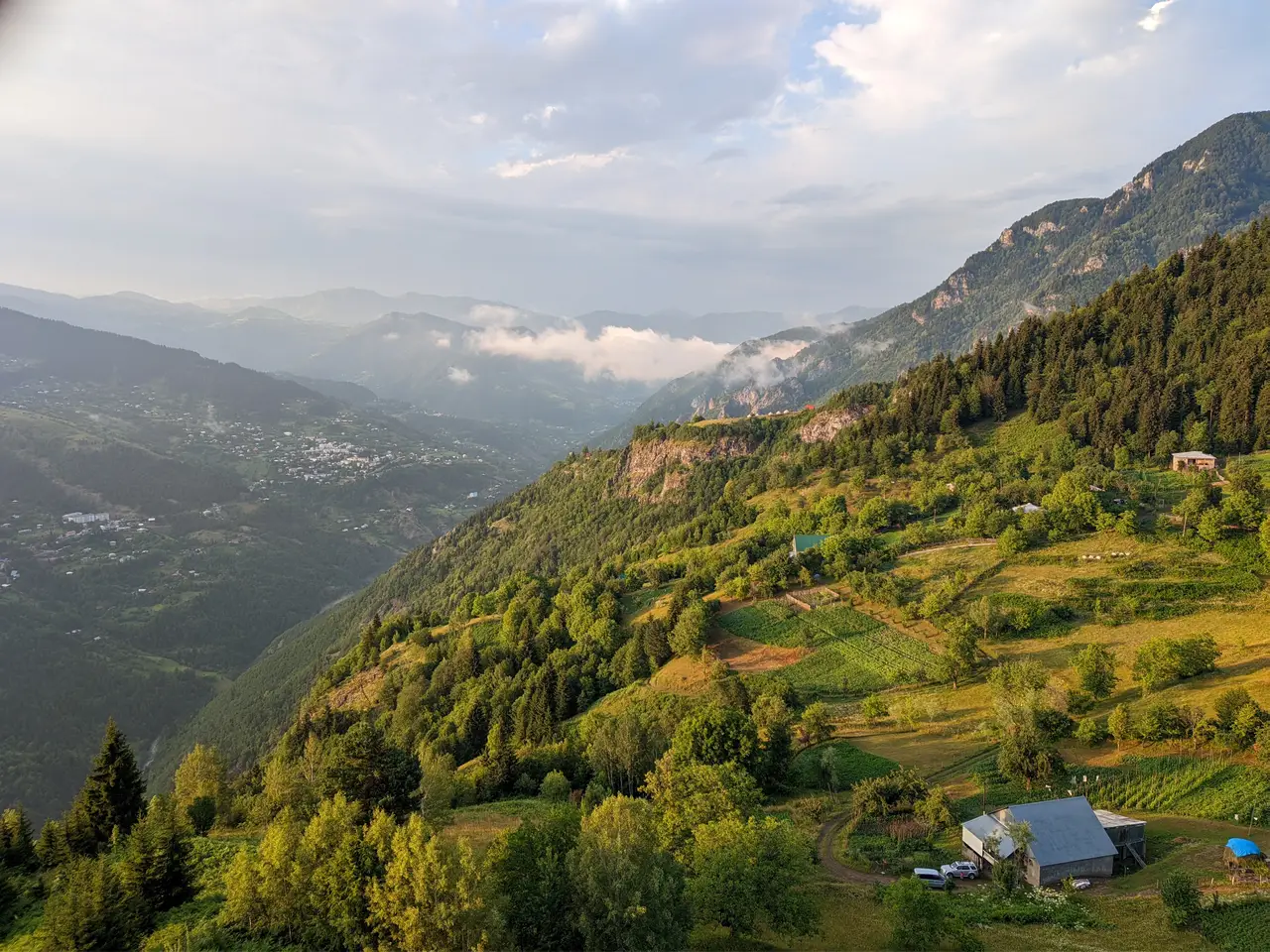
It is a different country from the beach. The three mountain municipalities hold 42,143 people between them at the 2024 census: Khulo 16,342, Keda 14,697 and Shuakhevi 11,104. Adjara as a whole has 402,929, and more than half of those live in Batumi. Khulo municipality covers 710 km2 and is made up of one borough, 12 communities and 78 villages; its population has fallen by 29.9% since 2014.
Three ranges box it in: the Meskheti to the north, the Shavsheti to the south and the Arsiani to the east, with ridge heights averaging 2,000 to 2,500 m. Travel in Georgia puts the highest peak in Adjara at Mount Kanli, 3,007 m, in the Arsiani range.
The mountains are also where Adjara's Muslim history is still visible. Across the region 59.54% of people are Orthodox Christian and 33.85% Muslim, but in Khulo municipality the census counted 22,072 Muslims against 956 Orthodox, that is 94.6%. It is the legacy of Ottoman rule from 1614 until Adjara passed to the Russian Empire in 1878. That is why the valleys hold dozens of richly decorated wooden mosques built between 1814 and 1926, Georgian buildings made under Ottoman influence rather than Ottoman buildings imposed on Georgia. The Soviets destroyed their wooden minarets in the 1930s and villagers saved the halls by offering them as agricultural warehouses; the metal minarets went up after independence.
Life up here still follows the animals. Khulo families move cattle to the summer pastures, the yaylas, for the warm months, and cheese making is the main household craft. The other local speciality is jara honey, kept in hollowed linden logs 70 to 120 cm long that are hung high in forest trees or set on cliff faces at around 1,200 m, out of reach of bears. One log yields up to about 19 kg, and it is cut once a year in early autumn, after the flowering is over.
How do you get to mountainous Adjara from Batumi?
Every mountain minibus leaves the OLD Batumi bus station at 1 Mayakovsky St, not the new terminal at Gogol 11. Buy nothing in advance: you find the van with the right sign in the window, pay the driver and leave when it fills.
| Route | Departures | Fare | Time |
|---|---|---|---|
| Batumi to Khulo | every 30 min, 08:00-20:00 | about 10 GEL | 2h30, up to 3h in roadworks |
| Khulo to Batumi | through the day, last dependable one about 18:00 | 5 GEL | 2h30 |
| Batumi to Keda and Makhuntseti (route 77) | every 30 min from 08:45, last back 17:30 | 2-4 GEL | 1h10 |
| Batumi to Shuakhevi | hourly, 07:50-18:50 | 4 GEL | - |
| Batumi to Skhalta | 09:00 and 15:00 | 5 GEL | - |
| Batumi to Khikhadziri | 10:00 (back 09:00) | 7 GEL | - |
| Batumi to Beshumi (summer only) | 08:50 (back 09:00, 10:00, 11:00, 12:00) | 15 GEL | about 4h |
| Khulo to Beshumi | 09:00 to 16:00 in season | 6 GEL | about 90 min |
| Khulo to Goderdzi | 11:00 from the tourist information centre, back 16:00 | 7 GEL | - |
| Danisparauli to Goderdzi resort | in season | 3 GEL | - |
The Skhalta and Khikhadziri services are the ones nobody lists: both are on Visit Ajara's route sheet and both are booked on the Khulo bus station number, +995 423 27 00 95. The Batumi to Khulo fare, meanwhile, is the one number every page gets differently. There is no official tariff on these private mountain vans: GoBatumi still prints 5 GEL, marshrutka.info shows 8 GEL, and what people pay in 2026 is about 10 GEL. Agree the price with the driver before you get in.
Other ways up:
- Taxi app. Bolt, Yandex or Maxim from Batumi to Khulo is about 2 hours and up to 175 GEL. Drivers often ask for more than the app price because they have no passenger for the way back, and a normal taxi cannot go above Khulo on the village roads.
- Private 4x4 transfer. One way, per car for up to four people: Batumi to Tago 265 GEL (2h30), Kutaisi 465 GEL (5h30), Akhaltsikhe 360 GEL (4h30), Tbilisi 925 GEL (8h30), Khulo to Tago 75 GEL. Paid in cash at reception when you arrive, not to the driver.
- From Kutaisi airport. Khulo is 132 km away, and everything goes through Batumi: bus to Batumi 2h for 25 GEL four times a day, train 2h for 31 GEL, or the marshrutka from Kutaisi bus station 3h for 20 GEL.
- From Tbilisi. 286 km by road. Train to Batumi 6h for 35 GEL, marshrutka from Didube 7h for 35 GEL, bus from Ortachala 6h30 for 40 GEL, then the Khulo minibus from the old station.
- By bike. Active Georgia in Batumi rents mountain bikes at 70 GEL a day on +995 555 969 396. Batumi to Khulo is a long, steady climb, so most riders do it downhill.
Is the Khulo-Tago cable car working in 2026?
No. The cableway between Khulo and Village Tago has been standing still for two years, and Visit Ajara marks it "under construction". The director of the municipal company that runs it says the old line could not be restored and was not safe, so a new cableway will be bought instead of repairing this one. The 2026 Adjara budget holds 200,000 GEL for the pre-project study. There is no reopening date.
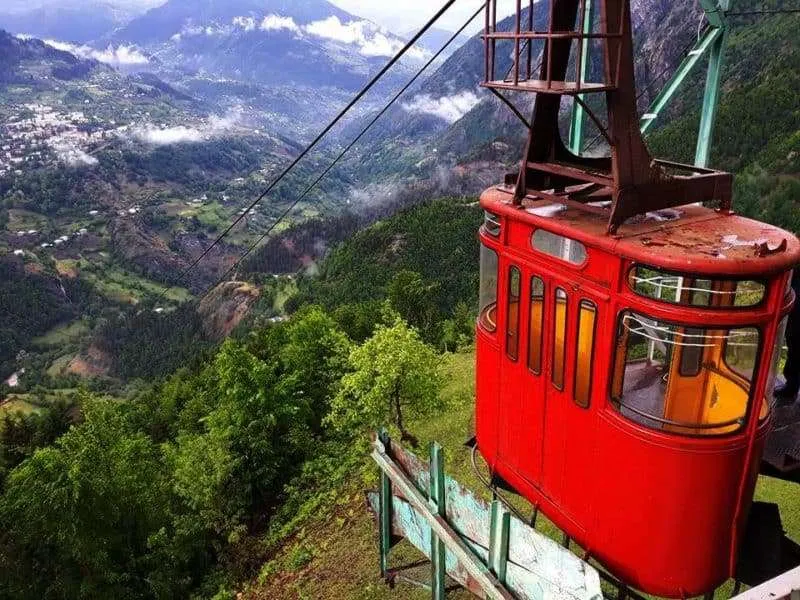
Its Google Maps entry is stale and still shows opening hours, which is why people keep arriving in Khulo expecting to ride it. It opened in 1985 and ran without a break until it stopped, 1,719 m across the gorge with no intermediate support tower and a height difference of 280 m, and a ticket cost 5 GEL.
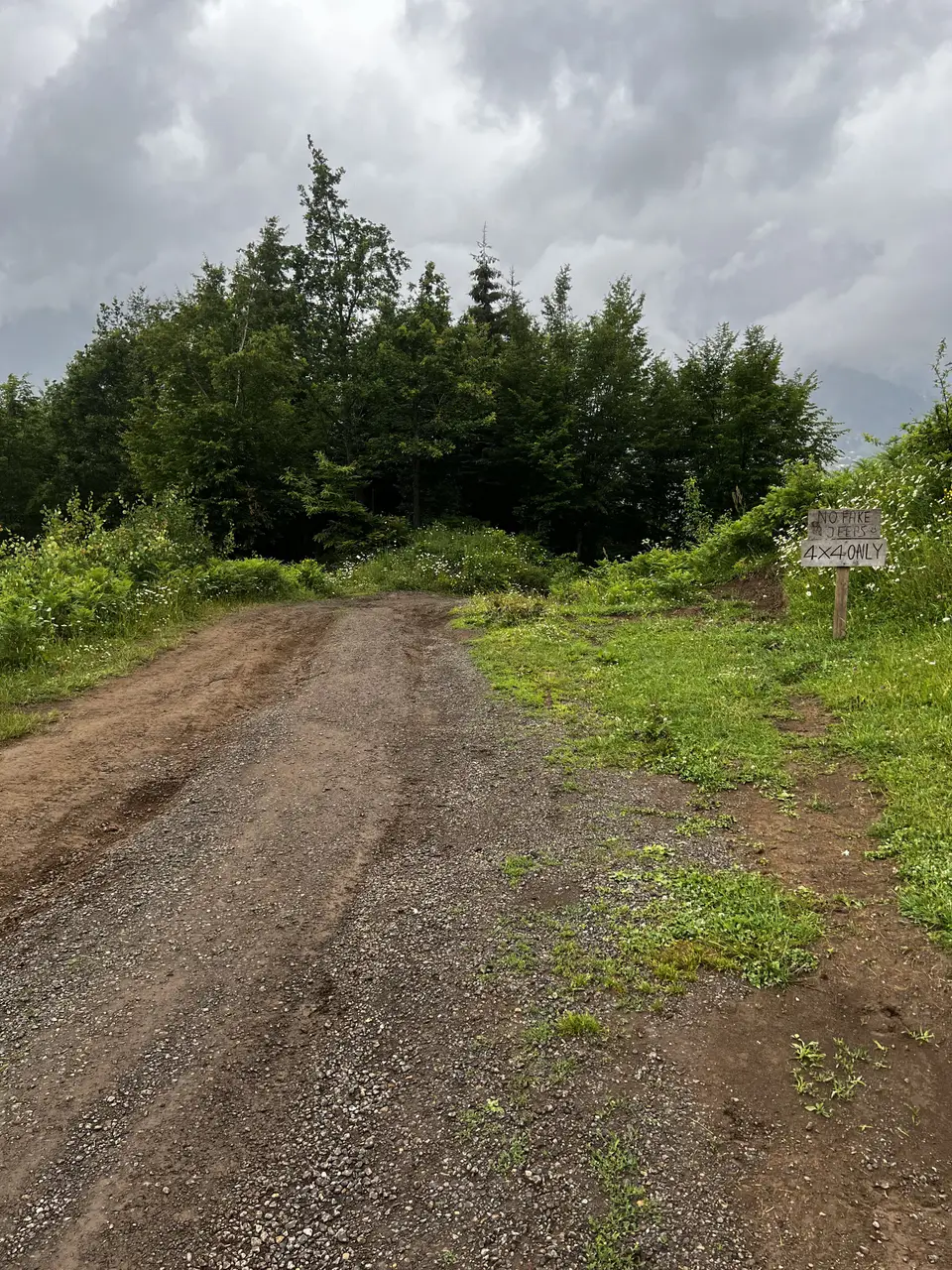
To reach Tago now you go by road: 8.6 km of mountain track from Khulo, 30 to 35 minutes, 4x4 only. The 4x4 taxi is 75 GEL per car for up to four people, and taxis wait at the old cable car station in Khulo. If you drive a normal car, park in Khulo centre and take the taxi up. Walking takes 2 to 3 hours on an unsigned path that starts at the stairs below the centre, so load it into an offline map first. The full story of the village and its cableway is in our Tago guide.
Staying in the Adjara mountains? See the glamping in Tago village
What is the road like, and do you need a 4x4?
The Batumi to Khulo half is asphalt and any car makes it. Above Khulo the surface breaks up, and the last unsealed stretch on the way to the pass is what makes people ask about 4x4s.
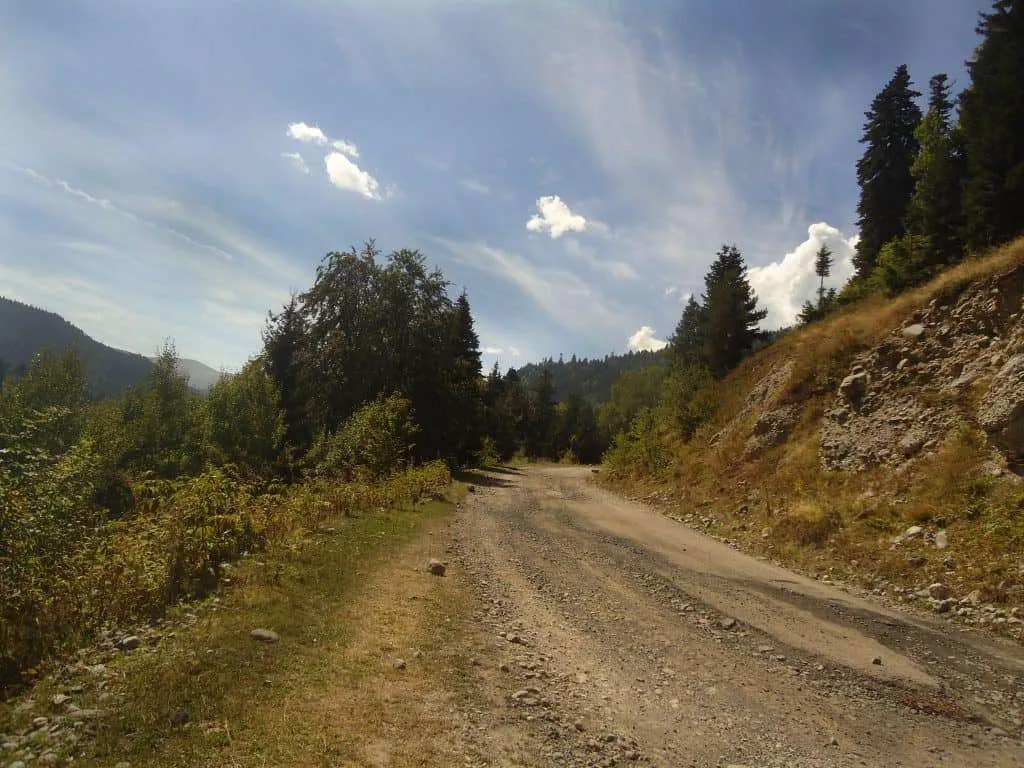
Here is the road as it stands, section by section:
| Section | Length | Surface |
|---|---|---|
| Batumi to Dioknisi | about 100 km | Sealed, a few single-lane landslide spots |
| Khulo to Zarzma (the pass road) | 47 km | Asphalt laid on 44 km, 3 km still unfinished |
| Goderdzi resort and the pass | about 30 km | Sealed |
| Zarzma to Akhaltsikhe | 34 km | Sealed, short gravel sections around Utkisubani |
Infrastructure minister Revaz Sokhadze said in September 2026 that work is finished on 44 of the 47 km of the Khulo to Zarzma road and the last 3 km run into 2027, with one landslide section going to a separate international tender for an engineering study. Slopes are being reinforced and retaining walls built on the slipping sections, and when it is all done the drive from Batumi to Akhaltsikhe drops by about an hour and a half. Our own page puts the remaining gravel near Bodzauri, and a sedan handles it in dry weather; the nuisances are dust, trucks squeezing past and narrowed roadworks.
From June to October a standard car normally crosses the pass, and the whole Batumi to Akhaltsikhe run takes under five hours. Outside those months you want a high-clearance 4x4 with good tyres, and in real snow the Batumi side is shut. The catch is the rental contract. Localrent's Georgia terms are typical: driving a hire car on the Batumi to Akhaltsikhe route over the Goderdzi pass is strictly forbidden, and no insurance is valid there. Read the small print before you book a car for this drive, or hire a 4x4 with a driver instead.
Practical points for the drive:
- Fuel in every large settlement along the main road except the Khulo to Zarzma stretch. Fill up in Khulo.
- Khulo, Keda and Goderdzi have supermarkets, pharmacies and ATMs. Village guesthouses and small cafes take cash.
- Mobile signal is unreliable between Khulo and Goderdzi. Download the offline map before you leave the coast. Magti has the best coverage in the Tago area.
- Village roads above the main valley are 4x4 ground, whatever the map says about the distance.
How do you get around once you are in the mountains?
Hire the last leg locally. Beyond the main valley road there is no scheduled transport at all, and a normal taxi from Batumi will take you to Khulo but not up the village roads, which is exactly why every guesthouse has a driver on call.
What the local cars cost, from the Adjara tourism department and our own published rates:
- 4x4 from Khulo to Goderdzi: 60 to 70 GEL. From Batumi to Goderdzi: 250 to 300 GEL.
- 4x4 with a driver from Khulo to Green Lake: 120 to 150 GEL, and the same car costs the same whether one of you rides in it or four.
- 4x4 taxi from Khulo up to Village Tago: 75 GEL per car for up to four people, 30 to 35 minutes. The shared shuttle that used to run this stretch has stopped; larger vehicles are quoted per car.
- Minibus from Khulo to Beshumi 6 GEL and to Goderdzi 7 GEL, both in season.
Walkers do get lifts on the main road. The Tago to Skhalta path, for instance, ends at the highway, where the Batumi marshrutka comes past. Up on the village roads there is almost nothing to flag down, so plan the way back before you set off.
What should you see in mountainous Adjara?
The short list: Khikhani fortress, the Shuamta lakes, Green Lake, the wooden mosque at Ghorjomi, Skhalta monastery, the medieval arched bridges and the Goderdzi pass with Beshumi behind it. Almost all of it is free and none of it has a ticket office.
Khikhani fortress
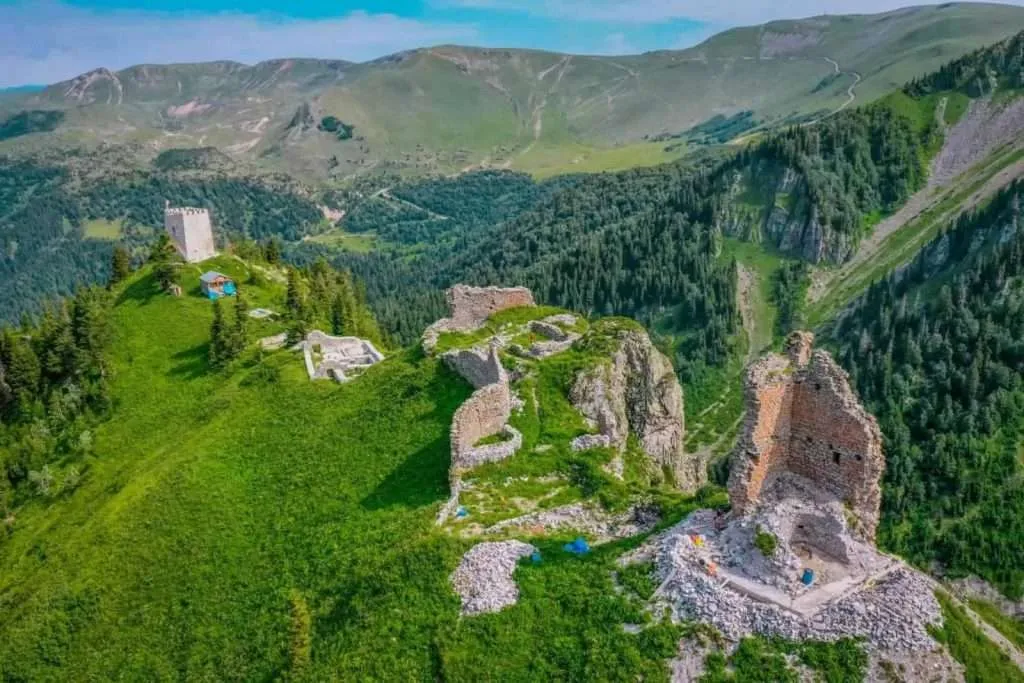
Where: Zeda Tkhilvana, Khulo municipality, 2,236 m. Drive: 45.5 km from Khulo, 112 km from Batumi, the last section on the Goderdzi-Chirukhi track, 4x4 only. Season: June to September. Watch out: it stands in the border zone, so bring your passport and apply for permission before you come.
The fortress was the seat of the Abuserisdze family, the grand dukes of Adjara, from the 11th to the 16th century. Excavations on the one-hectare site found a perimeter wall, four towers, a palace of the 10th to 13th centuries, a church, a well and a wine cellar with 43 kvevri that the Turks destroyed in 1191; Tbel Abuserisdze built a new cellar with 28 kvevri in the 1220s. Cannonballs of three calibres from a battle in 1815 came out of the same digs. Queen Tamar did not build it: Abuser and Sanano Abuserisdze retook it from the Turks on her orders.
The last climb is the work. From the road end it is 1 to 1.5 km, 400 to 420 m of ascent, 30 to 60 minutes if you are fit and 70 to 80 for most people, on the staircases and railings that the Adjara tourism department fitted along the final stretch with rest areas beside them. Walked in full from Batumi's hiking club the day is about 8 km on foot with 600 m of ascent.
The Shuamta lakes
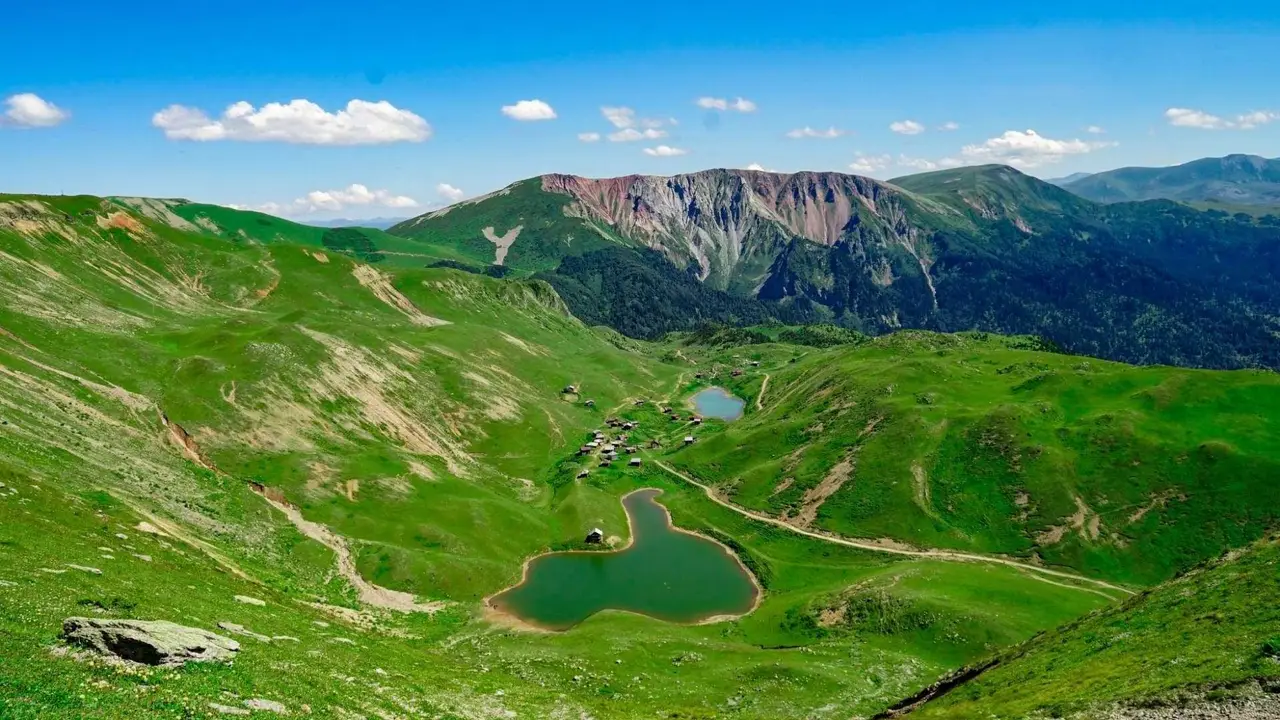
Where: Shuamta, Khulo municipality, about 2,150 m, five lakes among the summer pastures. Drive: 9.9 km from Beshumi on the Goderdzi-Chirukhi track, about 50 minutes by 4x4, or 9.6 km and about two hours on foot each way. Season: June to September.
Three of the five Shuamta lakes are noticeably bigger than the other two, and they sit among alpine meadows, yaylas and traditional Adjaran wooden houses, with Khikhani fortress on the skyline. The largest reads 2,152 m. They are 6.4 km from Khikhani by mountain track, so one off-road day takes in both, and you do not need a border permit for the lakes themselves if you come by the marked bypass rather than across from the fortress.
Green Lake (Mtsvane Tba)
Where: 2,058 m, 6 km north of the Goderdzi pass. Drive: 31 km from Khulo, 116 to 120 km from Batumi, paved to a car park at the end. Cost: free, no gate, no closing time.
The best-known lake in upper Adjara is 19.4 m deep, spring-fed with no inflow or outflow, and cold enough all summer to hurt. The last 6 km from the pass is now paved, so from June to October a normal car reaches the water. It is not a stop on the way to anywhere: from the main road the detour is 8.3 km and 12 minutes of climbing. Our full Green Lake guide has the fares, the drive times and where to camp.
Ghorjomi mosque and the wooden mosques of the valleys
Where: Ghorjomi village, 14.3 km up its own valley from Khulo, at 1,295 m. Cost: free, it is a working mosque. Watch out: Google Maps stops in the village below; drive on up and look beside the school.
Ghorjomi holds Georgia's largest wooden mosque, finished in 1903. Inside are five richly decorated wooden domes on elm pillars 8 m tall, and beside the entrance doors are murals of cornstalks and Ottoman steamships, the signature of the Laz masters who built and decorated these valleys' mosques. Friday prayers still happen here, so take your shoes off and dress plainly.
Other dated mosques sit within a short drive: Didachara of 1832, a Cultural Monument of National Importance since 2006; Zvare of 1834, with four borjgali sun spirals on its mihrab and Ottoman tulips on the minbar; Dghvani of 1907, whose central dome survives; and Beghleti, whose minbar inscription dates the decoration to 1926. The mosque at Gulebi is the easiest to reach from the main road, 4.1 km up a concrete lane that does not need a 4x4, and borjgali spirals are chiselled into its outer beams. It is no longer in regular use, and visitors find it locked as often as open.
Skhalta monastery
Where: Kinchauri village, Khulo municipality. Drive: 18.6 km up the Skhalta valley from Khulo, 88 km from Batumi, the turn signposted at Zamleti 8 km beyond Shuakhevi. Hours: 9:00-19:00. Cost: free.
A 12th-century hall church built by the same Abuserisdze eristavis who held Khikhani, and today the seat of the Skhalta eparchy. Fragments of wall painting survive inside, three carved crosses decorate the east facade, late medieval farm buildings including a wine cellar stand around it, and a medieval bridge crosses the Skhalta river beside it. Visit Ajara's Skhalta to Khikhani route links it with the fortress, the Furtio bridge and the Sherif Khimshiashvili museum in one drive.
The arched bridges of upper Adjara
GoBatumi counts 28 arched bridges on the Adjara cultural heritage register, most of them built between the 9th and the 13th centuries, and four are worth planning around.
Dandalo bridge, 60 km out of Batumi in Keda, is a few metres off the highway and costs no detour at all. It stands 7.6 m above the Adjaristskali, is laid on cut volcanic rock with lime mortar and resembles the letter S in plan, which spreads the load unevenly and makes this kind of arch much harder to build. Visit Batumi calls it the finest arched bridge in Georgia architecturally.
Purtio (Furtio) bridge is a 9th to 10th century arch where the Skhaltistskali joins the main valley at Zamleti, a 5.1 km detour off the Khulo drive. It carried the old road out of the Skhalta gorge to the central valley and survived the great Adjaristskali flood of about two centuries ago that destroyed everything else in its path. Steel steps lead down to the water. Do not swim: there is a dam upstream and a release raises the flow quickly.
The Khabelashvilebi bridge in the Chvani gorge is the rare one, a roofed timber bridge about 300 years old, built in the 18th century by a villager surnamed Beridze to link the gorge villages. Visit Ajara gives it 26 m: boxwood and yew piers, chestnut in the second section, oak and lime roof planks, and it has been a cultural heritage monument since 2013. It costs a 22 km detour off the Batumi to Khulo road, so it is a trip of its own; you park at the junction and walk 500 m along the river past picnic spots, a waterfall and watermills the villagers still use.
The Queen Tamar bridge at Makhuntseti runs 28.7 m across the Adjaristskali, built of volcanic stone and boiling lime, and it has no railings. It works because the waterfall is beside it; on its own most visitors find it ordinary.
The waterfall is free and open round the clock, with souvenir stalls below where haggling is normal and parking that fills fast. A quieter upper waterfall lies a few minutes away.
The Goderdzi pass, Beshumi and the alpine garden
The pass at 2,025 m is the high point of the Batumi to Akhaltsikhe road, 30 km above Khulo and 116 km from Batumi, and it is the gateway to everything above the tree line. Rhododendrons cover the slopes in June and July and summer temperatures up here rarely pass 20 C.
Beshumi, 120 km from Batumi, is a summer resort of wooden cottages spread between 1,850 and 2,000 m on the eastern side of the Arsiani range, 30 km from Khulo and 7 km from the pass. It is a climatic resort as much as a holiday one: the Georgian encyclopedia entry lists it for non-tuberculous respiratory complaints, gives its season as June to September and puts the August mean at 17 C and the January mean at -5 C. It is the venue for the Shuamtoba festival and the road base for the Shuamta lakes.
The Goderdzi Alpine Botanical Garden is free, has picnic spots inside and sits right on the Khulo to Beshumi road, a detour of 100 m. It is small next to the gardens in Batumi and Tbilisi, and it is the only place in the high country with labelled plants.
Khulo town
Khulo is the halfway point between Batumi and Akhaltsikhe and the place where most trips break. The 18th-century mosque in the centre has been restored, the St Andrew the Apostle church was consecrated in 2019, and the old cable car station is the meeting point for 4x4 taxis to the villages. The tourist information centre on M. Abashidze St answers on +995 577 90 90 15 and is the one number worth saving: they know what the road is doing today.
The prehistoric stones
Two older monuments sit in the same valleys and both are easy to overstate. The Tkhilvana menhir is a dressed standing stone on private land in Tkhilvana that Visit Ajara dates to the Iron Age, the 8th to 7th century BC; nobody knows what it was for, and archaeologists disagree about menhirs in general. The Kaloto altar at the edge of Kaloto village, of the same period and linked to the Lazare rain cult, is now completely covered with earth, so there is nothing to see above ground.
Which stops are really on the way, and which are a separate trip?
Half the "must see" lists for upper Adjara mix roadside stops with side valleys that cost you half a day. These are the real detours, measured on the road network.
| Stop | Off which drive | Detour | On the way? |
|---|---|---|---|
| Dandalo bridge | Batumi to Khulo | 0 km | Yes |
| Goderdzi alpine garden | Khulo to Beshumi | 0.1 km | Yes |
| Chateau Iveri | Batumi to Khulo | 1 km, 5 min | Yes |
| Makhuntseti waterfall and bridge | Batumi to Khulo | 4 km, 11 min | Yes |
| Purtio bridge | Batumi to Khulo | 5.1 km, 9 min | Yes |
| Beshumi | Batumi to Akhaltsikhe | 13.8 km, 22 min | Yes |
| Gulebi mosque | Batumi to Khulo | 4.1 km, 15 min | No, a short side trip |
| Green Lake | Khulo to Akhaltsikhe | 8.3 km, 12 min | No |
| Ghorjomi mosque | Khulo to Beshumi | 20.1 km, 33 min | No, its own valley |
| Khabelashvilebi bridge | Batumi to Khulo | 22.2 km, 35 min | No, the Chvani gorge |
| Eco House Merisi | Batumi to Khulo | 23.3 km, 38 min | No, the Merisi valley |
| Skhalta monastery | Batumi to Khulo | 28.8 km, 46 min | No, the Skhalta valley |
Khikhani is the extreme case: 45.5 km from Khulo on a track that ends at 2,204 m, with a checkpoint on the way. Treat it as a full day from wherever you sleep, not as a stop.
Do you need a permit for Khikhani fortress and the Shuamta lakes?
For Khikhani, yes. Four marked routes in upper Adjara run along the frontier with Turkiye and need prior permission from the State Border Protection Service: Koslitavi-Goma, Didvake-Nakonagwari, Khikhani fortress, and the Shuamta lakes approached from the Khikhani side. A marked bypass reaches the lakes without a permit, so a lakes-only day needs nothing but a passport.
Apply to the State Border Protection Service before you travel, the body Visit Ajara sends you to, with your route and the passport details of everyone in the party. On the ground you register at the border guard building on the way in, every person in the car shows a passport, and there is a barrier on the track between the fortress and the lakes. Carry the same passport you applied with.
Where should you stay in mountainous Adjara?
Sleep in the mountains rather than commuting from Batumi. A Khikhani or Green Lake day from the coast is 10 to 12 hours of which half is driving, and from a bed above Khulo it is a half day.
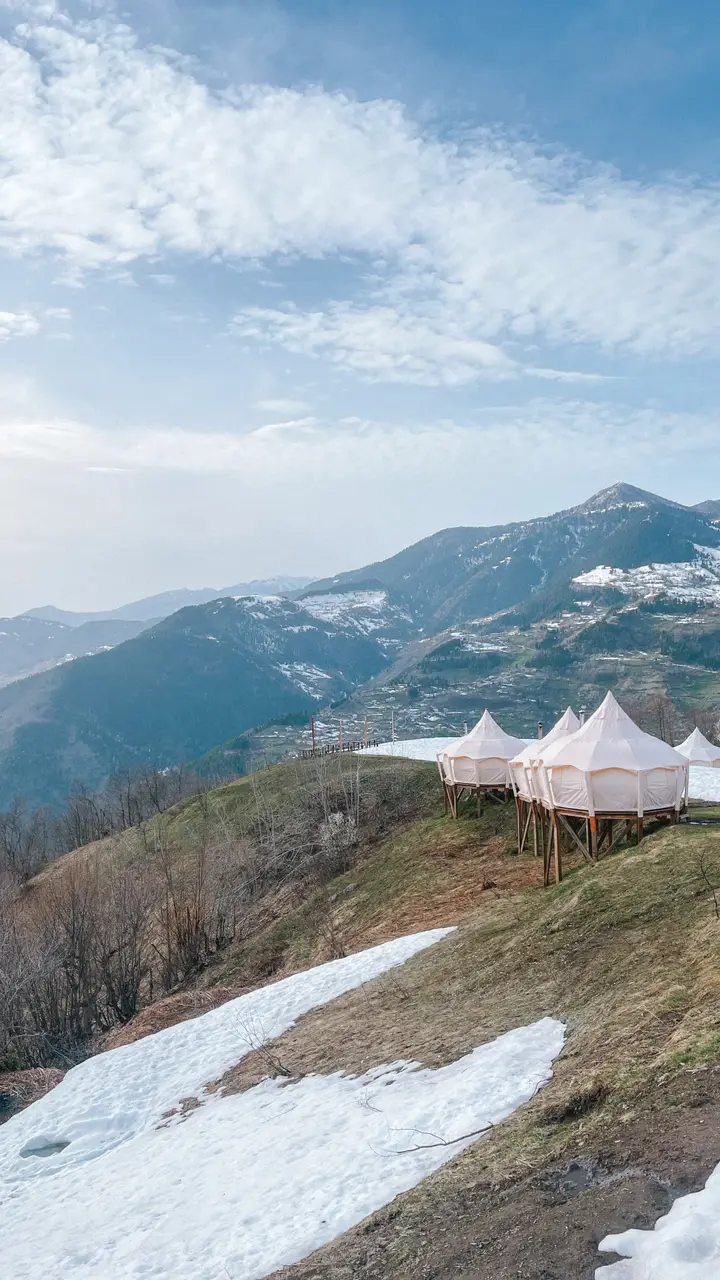
Glamping Tago, Village Tago (Khulo)
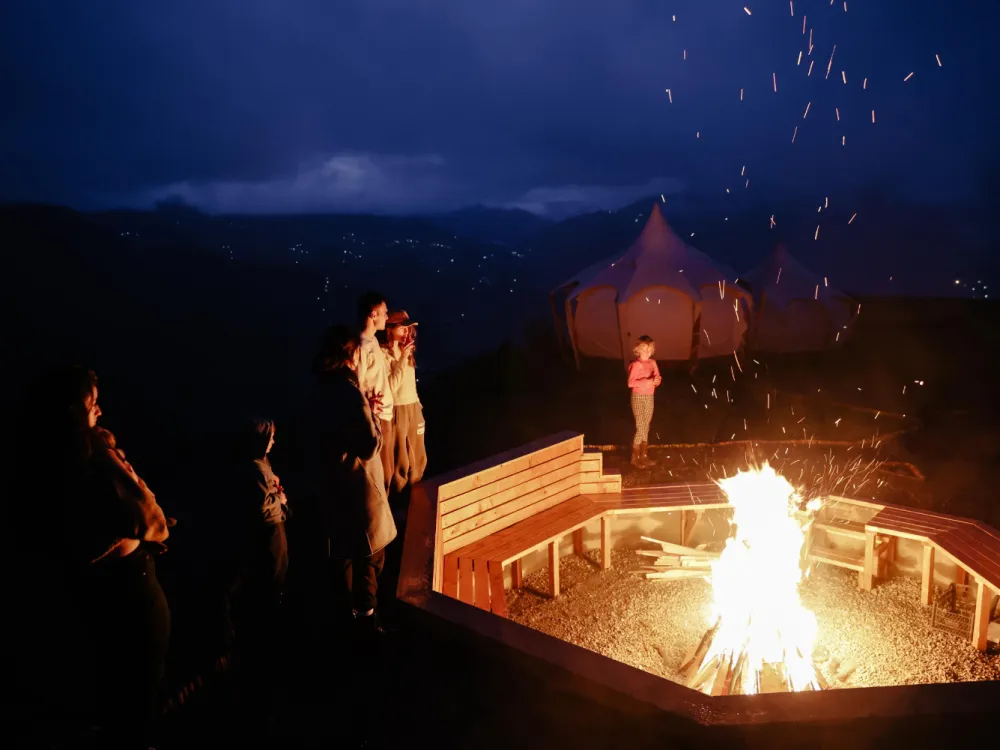
Where: Village Tago, 8.6 km above Khulo, 92 km from Batumi. Beds: 12 Lotus Belle tents for two plus a nine-bed dorm dome, up to 33 people. Season: 1 April to the end of October. Good for: a base for the lakes, Khikhani and the pass, with dinner and a sauna waiting, free for staying guests. Watch out: the last 8.6 km is a 4x4 road and we close for winter.
Ours, so judge it accordingly. The tents have stoves because the nights are cold even in July, the wifi is Starlink at around 300 Mbps, and Yurtalicious does the cooking. Prices move with the date, so take them from today's prices rather than any blog. If you have no 4x4, park in Khulo and we send the taxi down for you, 75 GEL per car for up to four.
If we are full, seven families in the same village keep 64 beds in 27 rooms plus 60 camping pitches, three to ten minutes' walk away.
Hotel Khulo Inn, Khulo
Where: Khulo town. Drive: 85 km from Batumi, on asphalt all the way. Good for: arriving by minibus without a car. Watch out: book by phone, the website does not answer.
Purpose-built in the traditional Adjaran oda style and run by the family who own it, with reviews in several languages that keep coming back to the balcony view and the homemade breakfast.
Sunrise guesthouse (Sanraisi), Khulo
Where: 15 Tbel Abuseridze St, Khulo. Good for: a cheap, warm night in town with a garden breakfast from the family's own produce and a home-cooked dinner on request. Watch out: no website, so call.
Goderdzi Twins Hotel, Goderdzi pass
Where: at the pass, 2,025 m, minutes from the lift. Good for: winter, and the cheapest decent bed up there if you take the six-bed dorm. Watch out: the pass, not a village; there is nothing else within walking distance.
A four-star with an indoor pool, sauna, steam room and a shared kitchen.
Hotel Ambassadori Goderdzi, Goderdzi pass
Where: at the ski resort. Good for: the only full spa hotel in the high country, open in winter and for the summer lift season. It is a large resort hotel, so you share the pools and the restaurant with everyone staying at the resort.
Alliance Villa Goderdzi, Goderdzi pass
Where: at the pass, a short walk from Goderdzi Twins; book by phone on +995 595 55 33 66. Good for: apartments with kitchens for a family or a small group. Watch out: two recent winter guests had no internet or phone signal for two days and deep snow on the approach.
Guest House Okropilauri, Shuakhevi
Where: Shuakhevi, the halfway village between Batumi and Khulo. Good for: a wine cellar, a tasting with the owner and home cooking on the way up or down. It is a stop on the drive rather than a base: Khulo is still 21 km and about half an hour further up, and the high villages beyond it.
Hill Inn, Dandalo (Keda)
Where: Ardzenadzeebi, Dandalo, 64 km from Batumi. Good for: cottages, tents and treehouses with an outdoor pool, sauna and outdoor bath. Watch out: this is lower Adjara, a 8.3 km detour off the Khulo road, and recent one-star reviews are about booking messages going unanswered, so get a written confirmation.
Hotel Chateau Iveri, Varjanisi (Keda)
Where: 1 km off the Batumi to Khulo road, so the only hotel on this list you pass anyway. Good for: the winery, the setting and a cooking masterclass. Watch out: reviews split hard on the restaurant, several praising the food and wine and several calling the kitchen poor.
Eco House Merisi and Haiku Cottages, Merisi (Keda)
Where: the Merisi side valley, 54 km from Batumi, a 23 km detour off the Khulo road. Good for: glass bedrooms and panoramic jacuzzis at Eco House, a quiet host-run pair of cottages at Haiku. Watch out: these are lower Adjara mountain hotels, an hour and a half short of the high country, and Eco House is the busiest property in the region at weekends.
For anything smaller, Visit Ajara lists Khikhadziri, Danisparauli, Elelidzeebi and Tago as the villages where families take guests, at about 50 GEL for a bed with three meals, and the Skhalta gorge has four guesthouses of its own.
Where can you eat in mountainous Adjara?
The restaurants are in Khulo town, down at Makhuntseti on the way up, and at the Goderdzi pass. In the villages between them you eat at the guesthouse table, so order ahead and carry food for the day. In the valleys ask for borano (cheese melted in butter), kaimaghi (thick clotted cream), sinori and naghbibora; historical records count up to 150 distinct Adjaran dishes. Pork is rare in the mountain villages, and lamb, dairy, chirbuli, iakhni and malakhto are everywhere.
Cafe Levon's, Khulo
The everyday place to eat in Khulo town: home cooking, warm hosts and prices that surprise people, with reviewers reporting four people fed for 32 to 60 GEL including homemade wine. The sign is invisible from the road, so ask a local where Levon's is.
Yurtalicious, the restaurant at Glamping Tago
Ours, in the yurt above the tents: a breakfast buffet from 9:00 to 11:00, lunch a la carte from 13:00 to 16:00 and a dinner buffet from 19:00 to 21:00 with dessert included, at the prices on our restaurant page. It is fully vegetarian, which is the one thing to know before you book, and everything is cooked that morning by women from the village. The kitchen cooks to numbers, so confirm dinner the day before.
Restaurant Chanchkerze, Makhuntseti
On the terrace above the Makhuntseti waterfall, 54 km out of Batumi: khinkali, kebab and Adjaran khachapuri in large portions. It is the obvious lunch stop on the way up, and the one recurring complaint is the wait when tour groups arrive together.
Cafe Bar Shergebuli, Keda
A family place a little further along the Batumi to Akhaltsikhe road, with its own garden, big portions and homemade wine. Prices sit slightly above town, which regulars think the quality justifies.
When is the best time to visit mountainous Adjara?
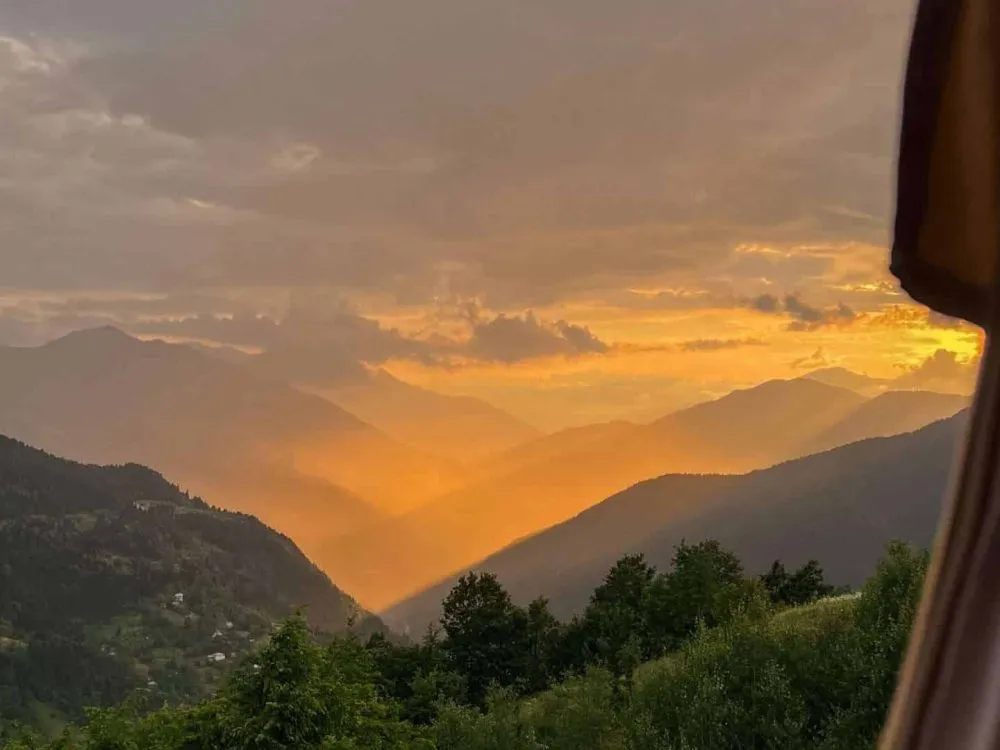
June to mid-October for the mountains, and late December to March if you came to ski. The pass has no fixed closing date; the practical driving season is June to October, with late May and November a gamble on the weather.
| Month | What it is like up here |
|---|---|
| January and February | Coldest in Khulo, about -6 C at night, and the best snow at Goderdzi. Approach from Akhaltsikhe. |
| March | The cold season ends on 14 March. Village roads still snowbound. |
| April | Lower valleys green, the pass still shut. Glamping Tago opens on 1 April. |
| May | Blossom in the valleys, the pass opens late in the month in a good year. |
| June | Rhododendrons around the pass, the road season begins, the warm season in Khulo starts on 5 June. |
| July | Driest month, 7.7 wet days on average. Yaylas in full use, lakes at their best. |
| August | Hottest, 23 C by day and 13 C at night in Khulo, and the busiest. Shuamtoba on the first weekend. |
| September | Warm days to about the 21st, cold nights, the quietest good month. |
| October | Last of the season, first snow possible at altitude, the pass closes when the weather decides. |
| November | First snow at Goderdzi. Most mountain places closed. |
| December | The cold season starts on 1 December and the lifts open. |
The figures for Khulo come from long-run weather records: the warm season runs 5 June to 21 September with daily highs above 19 C, January is the month with the most wet days at 10.9, July the fewest at 7.7, and the best stretch for warm-weather days is early July to late August.
Folk festival: Shuamtoba
Shuamtoba is the one date worth planning a trip around. It is held in Beshumi on the first weekend of August, run by Khulo municipality and the Government of Ajara rather than a festival company, and it is free to watch: horse racing, chidaoba wrestling, folk ensembles, crafts and food stalls in mountain dress. In 2026 it fell on Sunday 2 August.
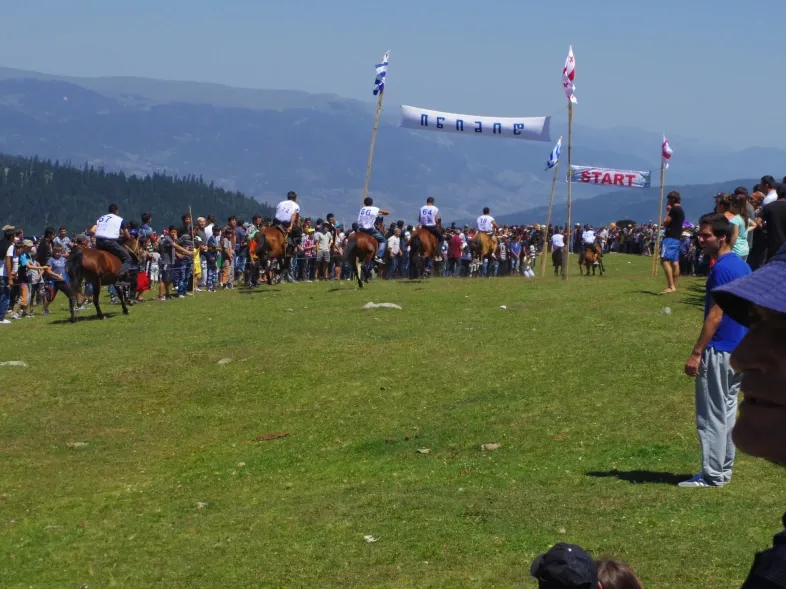
Come up for the day. Beshumi has few beds and the drive is about three hours of climbing from Batumi, so leave early and go with a driver who knows the road. There is no festival website, so the date for the next one comes from the Khulo tourist information centre on +995 577 90 90 15.
Can you visit mountainous Adjara in winter?
Yes, but only the pass area, and usually from the east. The Roads Department says it will buy snow-clearing equipment and keep the Akhaltsikhe to Khulo direction open through the winter; until that happens the Batumi side is the one that closes, and the higher villages are cut off.
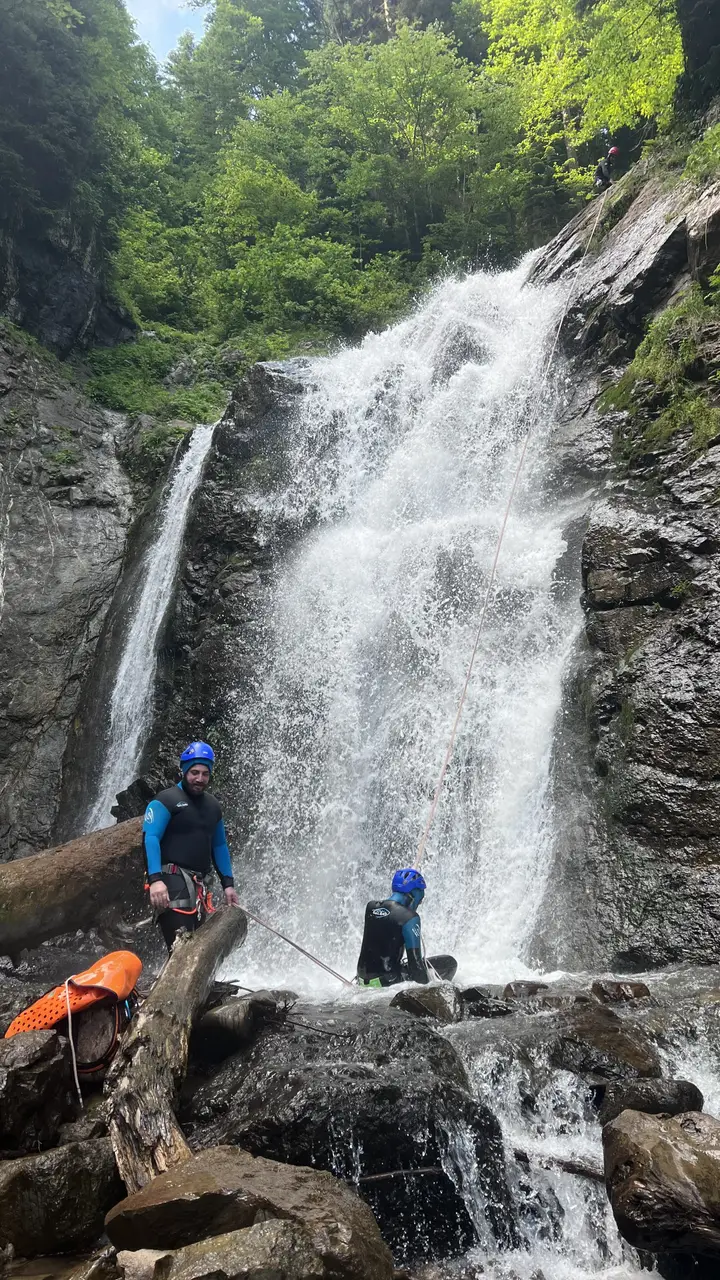
Goderdzi is where Black Sea moisture runs straight into the ridge, so the snow is deep: it arrives in November and lasts into April, with more than two metres at the higher elevations, and January and February are the best of it. The lifts are 8-seater gondolas and 6-seater bubble chairs plus a T-bar and a moving carpet, running from a 1,724 m base station to 2,364 m, with 8 km of trails, a longest continuous descent of 4.5 km and a 150 m beginners' track. They run 10:00-16:00 on weekdays and 10:00-17:00 at weekends. A full-day lift pass is 30 GEL and a single ride 5 GEL.
Getting up in snow: from Batumi it is about three hours by 4x4 with chains, and when the last 20 to 25 km are deep in snow drivers leave the car in Khulo and take the resort snow vehicle. That transport leaves the Khulo tourist information centre at 11:00 and comes back from Goderdzi at 16:00, 7 GEL for the Khulo to Goderdzi leg and 3 GEL from Danisparauli up to the resort.
Glamping Tago closes from the end of October to 1 April, so in winter the beds are at the pass.
What does a trip to mountainous Adjara cost in 2026?
| Item | 2026 price |
|---|---|
| Marshrutka Batumi to Khulo | about 10 GEL |
| Marshrutka Khulo to Batumi | 5 GEL |
| Marshrutka Batumi to Beshumi, summer | 15 GEL |
| Minibus Khulo to Beshumi / to Goderdzi | 6 / 7 GEL |
| Taxi app Batumi to Khulo | up to 175 GEL |
| Private 4x4 transfer Batumi to Tago, up to 4 people | 265 GEL |
| 4x4 taxi Khulo to Tago, up to 4 people | 75 GEL |
| 4x4 with driver Khulo to Green Lake | 120-150 GEL |
| 4x4 with driver Khulo to Goderdzi | 60-70 GEL |
| 4x4 with driver Batumi to Goderdzi | 250-300 GEL |
| Mountain bike hire in Batumi | 70 GEL a day |
| Village guesthouse bed with three meals | about 50 GEL |
| Cottage at Goderdzi | 60-150 GEL |
| Goderdzi guesthouse with three meals | 35-40 GEL |
| Breakfast / dinner at Yurtalicious | 32 / 37 GEL |
| Breakfast / lunch / dinner at Goderdzi | 10 / 15 / 15 GEL |
| Goderdzi lift, single ride / day pass | 5 / 30 GEL |
| Ski and boot rental | 5 GEL an hour, 30 GEL a day |
| Snowboard or toboggan rental | 5 GEL an hour, 20 GEL a day |
| Ski instructor | 20 GEL an hour |
| Khikhani day from Batumi with Take and Hike | 160 GEL per person |
| Hiking guide from Glamping Tago | from 150 GEL |
| Khikhani, Skhalta, Green Lake, Makhuntseti, the alpine garden | free |
Add it up for two people doing two days without a car: 20 GEL of minibus fares up and back, two village nights with three meals at about 50 GEL each per night, and one 4x4 day from Khulo at 120 to 150 GEL for the car. The 4x4 is the item that moves, and it costs the same whether one of you rides in it or four.
What can you do in mountainous Adjara besides drive?
Jeep days. The standard round from a base near Khulo is Skhalta monastery, Khikhani and a picnic at the Shuamta lakes, 8 to 10 hours. Ours runs in a Soviet off-roader, and on a flat stretch you can drive it yourself. Local drivers in Khulo quote 120 to 150 GEL per car for Green Lake and 60 to 70 GEL for Goderdzi.
Guided group hikes. Take and Hike in Batumi runs a scheduled Khikhani day at 160 GEL per person including the transfer, the tour leader and meals, with a 10% discount for returning club members. They leave Batumi at 08:00, drive about three hours, pass the checkpoint and walk about 8 km with 600 m of ascent. They also rent hiking and ski gear from their shop at 27 Tbel-Abuseridze St, open 11:00 to 20:00.
Jara honey. The hives are working apiaries, hung in the forest or set on cliffs at around 1,200 m, so a visit is arranged in advance rather than dropped in on. We run a honey day to a sixth-generation keeper's house.
Skiing and the summer lifts. Goderdzi in winter, and since 2026 the Zanka and Chanchakhi lifts in front of the Ambassadori also run daily 11:00-17:00 in summer, with passes at the resort ticket offices. Check before planning a summer lift day, because the dates move with the season.
Cooking and village days. Khulo's own programme includes meeting the elders' ensemble Bermukha, and most village guesthouses will show you how the cheese and the cornbread are made if you ask the day before.
Is mountainous Adjara good for hiking?
It is the best walking in western Georgia that almost nobody walks, with marked routes from one-hour strolls to a three-day crossing. Two things to plan for: the border zone, and the lack of signs.
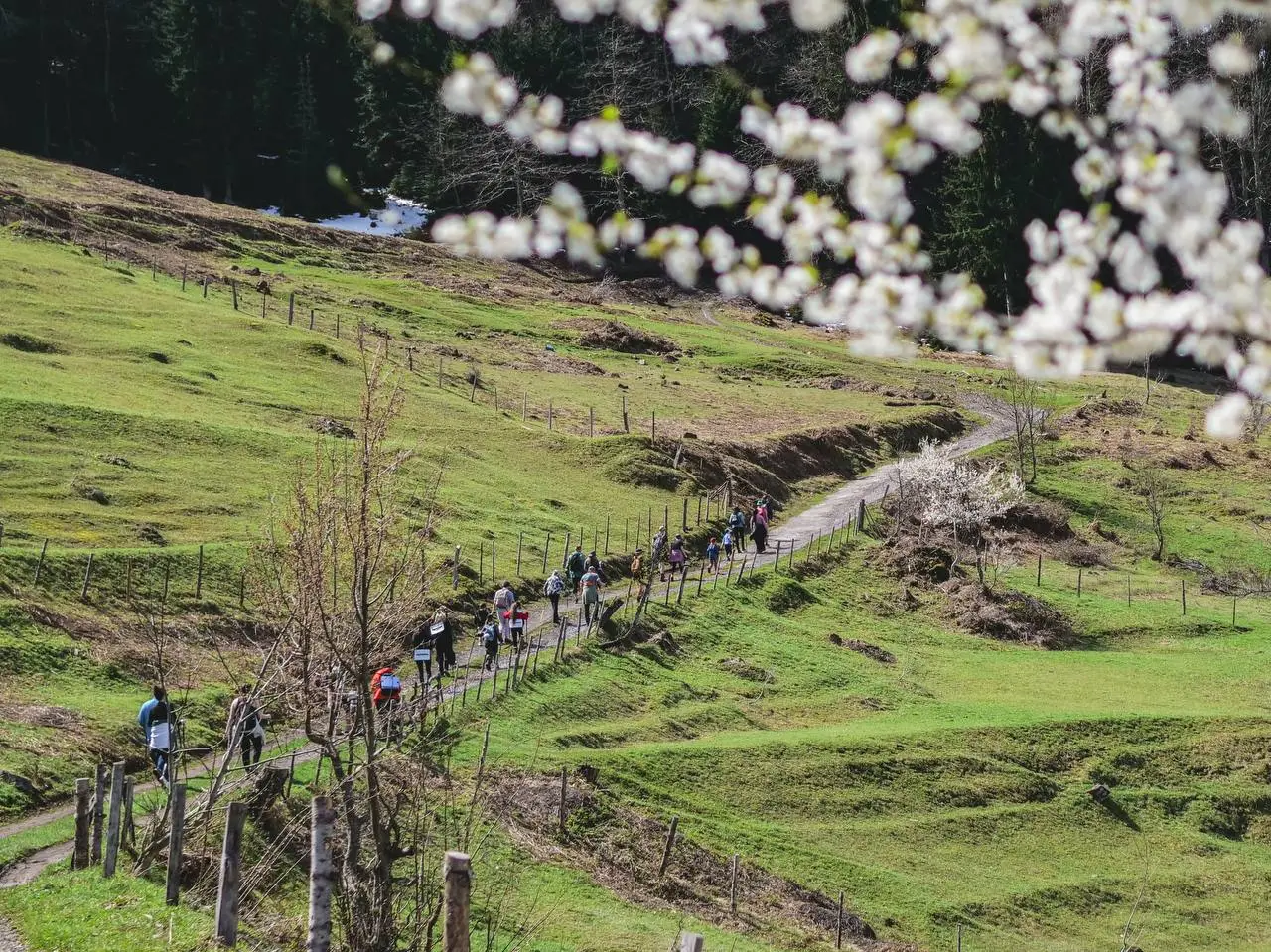
Khikhani fortress. Three ways up, all measured: 11 km and 3h30 from Khikhadziri with 1,124 m of ascent, 6 km and 2h12 from Bako with 756 m, or 2.6 km and 1h10 from the forest border where an off-road car stops, with 442 m. Our Khikhani guide has the detail.
The Shuamta lakes from Beshumi. 9.6 km and about two hours each way on the track, finishing at 2,152 m. From where the jeeps stop it is an hour on foot.
Tago to Skhalta monastery. 7.5 km and about 1h45 down the valley path, dropping from 1,200 m at Tago to 714 m at the monastery. Walkers finish at the main road and flag down the Batumi marshrutka.
The Chirukhi-Khikhadziri-Goderdzi alpine route. Visit Ajara's marked three-day crossing runs 70 km between Shuakhevi and Khulo municipalities, away from the highway, through pastures with shepherds' huts you can sleep in, past Lake Chirukhi, the Dzhinali waterfall, Lake Karagoli and the Shuamta lakes. It can be walked from either end.
The Khikhadziri to Shuamta to Khikhani day. Visit Ajara's marked one-day route is 33 km and graded moderate: Kveda Tkhilvana at 3.3 km with its altar and mosque, the Goderdzi gorge at 6 km with the largest lake 200 m away, then south to the Tsiplnara pastures, along the Chachuni river to the border crossing point and 1.5 km of trail to the fortress. Fill up with water at Kveda Tkhilvana.
A guide from Glamping Tago is from 150 GEL. Trails are mostly unmarked, shepherd dogs work the pastures, and phone signal comes and goes, so walk with an offline map and tell someone your route.
How do you plan a two or three day trip?
- Pick your base first. Khulo town if you arrive by minibus, Village Tago or another village if you want the mountains around you, the Goderdzi pass if you came to ski. Book it before you book anything else: the good beds up here are few.
- Book the bed early for July and August, earlier still for the Shuamtoba weekend, and get a written confirmation. There are few beds above Khulo and late August is the busiest week of the year.
- Decide about the car. No 4x4 means you reach Khulo, Goderdzi and the pass, but not the villages or the lakes; arrange the 4x4 leg with your guesthouse when you book.
- Apply for the Khikhani permit as soon as you have dates, with the State Border Protection Service, with your route and everyone's passport details, or take a tour that handles it.
- Call ahead for food. Village kitchens cook to numbers, so order dinner and breakfast the day before.
- Check the road and the pass a day or two before you drive: the Khulo tourist information centre on +995 577 90 90 15 knows the local state of it, and the Roads Department on +995 32 2 31 30 76 answers for the pass.
- Draw the cash before you leave the coast. Khulo, Keda and Goderdzi have ATMs; above them nothing takes a card.
A three-day shape that works: day one, drive up with stops at Dandalo, Makhuntseti and Purtio, sleep above Khulo; day two, the off-road day to Skhalta, Khikhani and the Shuamta lakes; day three, the pass, Green Lake and the alpine garden, then down to Batumi or on east to Akhaltsikhe.
What do people get wrong about mountainous Adjara?
Glamping Tago for this
Glamping Tago as your base in mountainous Adjara
We are on the hill above Village Tago in Khulo municipality, 8.6 km of mountain road above Khulo town and 92 km from Batumi. Sleeping up here turns the big days out into half days: Khikhani, the Shuamta lakes and Green Lake are all jeep trips from the door instead of 10 to 12 hour returns from the coast.
Twelve Lotus Belle tents for two and a nine-bed dorm dome take up to 33 people, the tents have stoves for the cold nights, and Yurtalicious cooks a vegetarian breakfast and dinner every day of the season. Our own drivers run the off-road day to Skhalta, Khikhani and the lakes.
If your car cannot manage the last stretch, park in Khulo centre and we send the 4x4 taxi down for you. Rates move with the date, so check today's prices rather than any blog.
- Where
- Village Tago, Khulo municipality, upper Adjara, 92 km from Batumi
- Beds on site
- 12 tents for two plus a nine-bed dorm dome, up to 33 guests
- Season
- 1 April to the end of October, closed in winter
- Getting here
- 2h30 by private 4x4 from Batumi (265 GEL per car for up to 4), or the Khulo marshrutka plus our 4x4 taxi at 75 GEL per car
- Food
- Yurtalicious, fully vegetarian: breakfast buffet, lunch a la carte and a dinner buffet every day
- Prices
- They change with the date: see today's prices on glampingtago.ge/glamping
- Off-road day
- Skhalta, Khikhani and the Shuamta lakes with our own drivers, 8 to 10 hours
- Practical
- Starlink wifi at about 300 Mbps, stoves in the tents, sauna free for staying guests, dogs welcome
Questions people ask
Is the Khulo-Tago cable car working in 2026?
No. The cableway has been standing still for two years, Visit Ajara marks it under construction, and the municipal company that runs it says the old line could not be restored and was not safe, so a new one will be bought. The 2026 Adjara budget holds 200,000 GEL for the pre-project study and there is no reopening date. Its Google Maps entry is out of date and still shows opening hours.
How do you get from Batumi to Khulo by public transport?
Marshrutkas leave the old Batumi bus station at 1 Mayakovsky St every 30 minutes from 08:00 to 20:00, cost about 10 GEL and take 2h30, up to 3 hours when roadworks slow them. There is no booking: find the van with the Batumi-Khulo sign, pay the driver and leave when it fills. Coming back, the last dependable minibus is around 18:00 and the fare is 5 GEL.
Do you need a 4x4 in mountainous Adjara?
Not for the main road. Batumi to Khulo is asphalt, and from June to October a standard car normally crosses the Goderdzi pass and reaches Green Lake. You need a 4x4 for the village roads above the valley, for the Shuamta lakes and Khikhani, and for the pass outside the summer window. Hire car terms in Georgia forbid the Goderdzi pass and no insurance is valid on it, so hire a 4x4 with a driver for that drive.
Do you need a permit to visit Khikhani fortress?
Yes. Khikhani lies in the border zone with Turkiye and needs prior permission from the State Border Protection Service, applied for before you travel with your planned route and the passport details of everyone in the party. You register at the border guard building on the way in, everyone shows a passport, and there is a barrier on the track between the fortress and the lakes. The Shuamta lakes on their own do not need a permit if you take the marked bypass.
When is the best time to visit mountainous Adjara?
June to mid-October for the mountains. Rhododendrons flower around the pass in June and July, July is the driest month, August is the hottest and busiest with Shuamtoba on the first weekend, and September is the quietest good month. The pass has no fixed closing date but the practical driving season is June to October.
Can you drive from Batumi to Akhaltsikhe over the Goderdzi pass?
Yes in summer, and it is 167 km, under five hours. Asphalt is laid on 44 of the 47 km of the Khulo to Zarzma section and the last 3 km run into 2027, which will cut about an hour and a half off the drive. No scheduled bus crosses the pass: the Batumi to Akhaltsikhe marshrutka goes the long way round via Khashuri, 317 km for 20 GEL.
Where should you stay in upper Adjara?
Khulo town if you arrive by minibus, a village above it if you want the mountains around you, or the Goderdzi pass if you came to ski. Glamping Tago is in Village Tago from 1 April to the end of October, Hotel Khulo Inn and the Sunrise guesthouse are in town, and Goderdzi Twins, Ambassadori and Alliance Villa are at the pass. Village families take guests for about 50 GEL with three meals.
Is mountainous Adjara worth visiting in winter?
Only the pass area, and usually from the Akhaltsikhe side, because the Batumi approach closes in snow and the higher villages are cut off. Goderdzi holds more than two metres of snow at the higher elevations from November into April, with the best conditions in January and February; a full-day lift pass is 30 GEL. When the last 20 to 25 km are deep in snow, drivers leave the car in Khulo and take the resort snow vehicle, which leaves the tourist information centre at 11:00 and returns from Goderdzi at 16:00.
Is there mobile signal and are there cash machines?
Khulo, Keda and Goderdzi have supermarkets, pharmacies and ATMs, and there is fuel in every large settlement except the Khulo to Zarzma stretch. Signal is unreliable between Khulo and Goderdzi, so download an offline map before you leave the coast, and carry cash for village guesthouses and small cafes.
Glamping Tago
Stay in the mountains of Adjara
Glamping Tago is in Tago village, Khulo: tents with real beds, a yurt restaurant and a sauna. A good base for exploring mountainous Adjara.