
Planning guides
Altitude and health at 1,200 m in Adjara, Georgia: a guide for retreat and wedding guests (2026)
Published 8 November 202617 min readPrices and facts checked: November 2026
At about 1,200 m, Glamping Tago is too low for altitude sickness in almost everyone; the risk usually starts above 2,500 m. What guests need to plan for is strong sun, cold nights, slopes and the 9.3 km to the nearest 24-hour clinic in Khulo.
On this page+
- Which mountain venue altitude fits your guests?
- Can you get altitude sickness at 1,200 m?
- What does 1,200 m actually change for your guests?
- How strong is the sun at 1,200 m, and how do you protect guests?
- How cold do nights get, and what should guests pack?
- Does alcohol hit harder at a mountain wedding?
- Which day trips go higher, and what changes there?
- Is a wedding at 1,200 m safe for older guests and guests with heart or lung conditions?
- Is a mountain retreat at 1,200 m safe for children and babies?
- What should pregnant guests plan?
- Sauna, cold plunge and mountain water: who should skip it?
- Dogs, ticks and insects: what should guests watch for?
- Where is the nearest clinic, pharmacy and hospital to Glamping Tago?
- What does health cover cost, and what is free?
- What should a retreat or wedding organiser plan for health?
- Questions people ask
Map of the places in this guide
Zoom with + and - or by pinching. Click the map first to zoom with the mouse wheel.
- 1Glamping Tago
- 2Khikhani Fortress
- 3Green Lake (Mtsvane Tba)
- 4Goderdzi pass and ski area
- 5Khulo Clinic (Georgian Clinics)
- 6Aversi pharmacy, Khulo
- 7Batumi Republican Clinical Hospital
- Batumi to Glamping Tago by car, past Khulo Clinic · 94.7 km
- Glamping Tago to Batumi Republican Clinical Hospital · 90.3 km
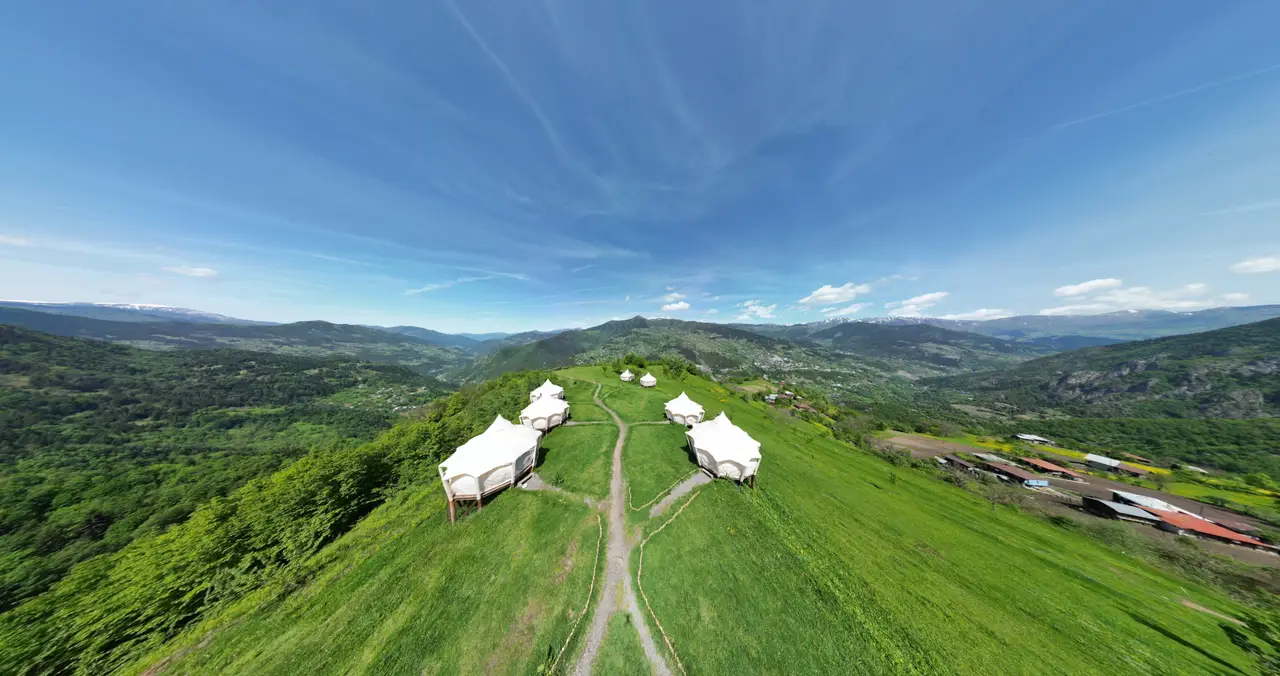
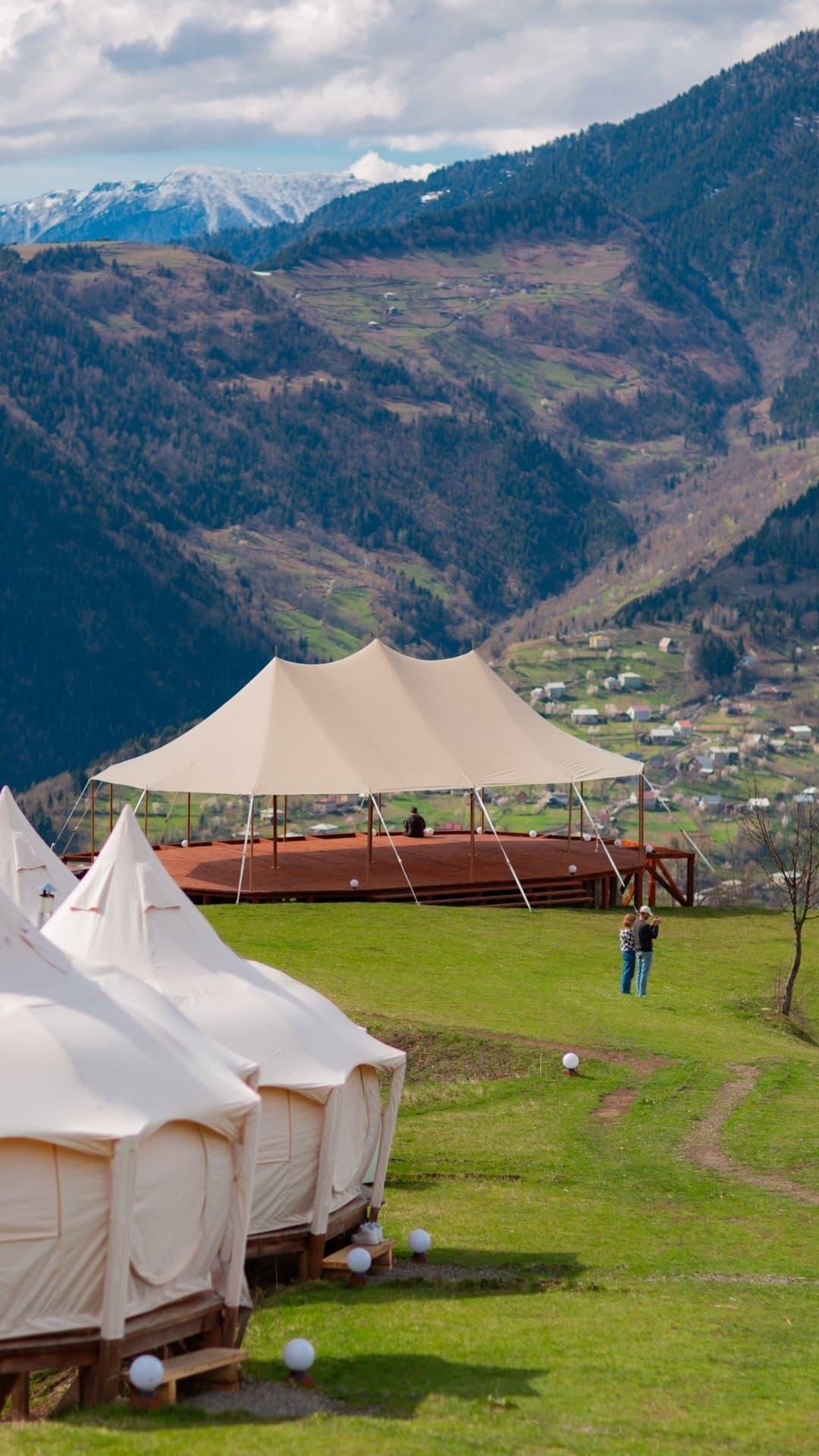
Glamping Tago sits at about 1,200 m on a ridge above Village Tago in Khulo, mountainous Adjara, 2.5 to 3 hours from Batumi. That is too low for altitude sickness in almost everyone: the NHS puts the usual starting line above 2,500 m, and the CDC Yellow Book treats 1,200 m as the low-altitude baseline its advice starts from. What 1,200 m does change is the sun, the cold at night, the effort of walking on slopes and how far you are from a hospital. This guide covers each of those for wedding guests, retreat groups and the people who organise them.
Which mountain venue altitude fits your guests?
The height you sleep at is what matters most for altitude illness. Here is how Glamping Tago compares with the mountain bases most groups in Georgia (the country) consider.
| Where you sleep | Sleeping altitude | Above the UK "high altitude" line of 1,500 m? | Typical climb on arrival day | Nearest airport |
|---|---|---|---|---|
| Glamping Tago, Khulo (Adjara) | About 1,200 m | No | Batumi (sea level) to 1,200 m | Batumi, 2.5 to 3 hours |
| Stepantsminda / Kazbegi | About 1,740 m | Yes | Tbilisi (about 490 m) to 1,740 m | Tbilisi |
| Gudauri | About 2,200 m | Yes | Tbilisi (about 490 m) to 2,200 m in one drive | Tbilisi |
The altitudes come from the GTour altitude table and TripMate Georgia; the 1,500 m line is the UK definition from TravelHealthPro. The UK Foreign Office names Gudauri and Kazbegi, not Adjara, when it warns about altitude in Georgia.
Glamping Tago (our venue), Adjara
Where: the top of the hill above Village Tago, Khulo municipality. Altitude: about 1,200 m. Drive: 85 km of asphalt from Batumi to Khulo, then 30 to 35 minutes up by 4x4. Capacity: built for weddings of about 30 guests and retreats of up to 30; the whole camp belongs to one group and everyone sleeps on site. Season: early April to the end of October.
Can you get altitude sickness at 1,200 m?
Practically no. Acute mountain sickness (AMS) usually starts above 2,500 m, and the Cleveland Clinic calls it rare below about 2,400 m.
TravelHealthPro defines high altitude as anything above 1,500 m and says AMS only rarely appears between 1,500 and 2,500 m. The Merck Manual adds that most people can go up to 1,500 to 2,000 m in a single day without problems. Sleeping at 1,200 m sits below all of these lines.
Fitness has nothing to do with it either way: the CDC says training does not change your altitude-illness risk. So a guest who gets a headache on the first evening at the camp almost always has a more ordinary cause: a long winding drive, too little water, too much sun, a late night or the first glass of chacha.
What does 1,200 m actually change for your guests?
Four things: stronger sun, cold nights, wet and steep paths, and distance from a big hospital. Everything else, including how alcohol works, stays the same as at home.
- Sun. UV rises about 10% for every 1,000 m you climb, so at the camp it is roughly 12% stronger than on the beach in Batumi.
- Cold. Summer nights drop to about 15°C in July and 5 to 8°C in October, even after a warm day.
- Effort. The camp is on a slope. Getting from tent to restaurant to the bathhouse means short climbs, and after rain the paths get muddy.
- Distance. The nearest 24-hour clinic is 9.3 km away in Khulo; the main hospital is in Batumi, about 90 km away.
Planning this yourself? See how Glamping Tago can host it
How strong is the sun at 1,200 m, and how do you protect guests?
Strong enough to burn a wedding party in one afternoon. Batumi's maximum UV index is about 9 in June, 10 in July and 9 in August at sea level, and the camp is higher still.
At UV 8 and above, the US EPA advises extra protection and shade from late morning to mid-afternoon; a quick test is that if your shadow is shorter than you are, the UV is strong. Light cloud does not help much: the WHO says thin cloud has little effect and can even raise UV.
What works for an outdoor ceremony or a day of sessions on the platform:
- Plan the ceremony, the group photo and long outdoor sessions before 11:00 or after 15:00, the window the NHS gives for shade.
- Put sunscreen on the welcome table: broad spectrum, SPF 30 or higher and water resistant, as the American Academy of Dermatology recommends.
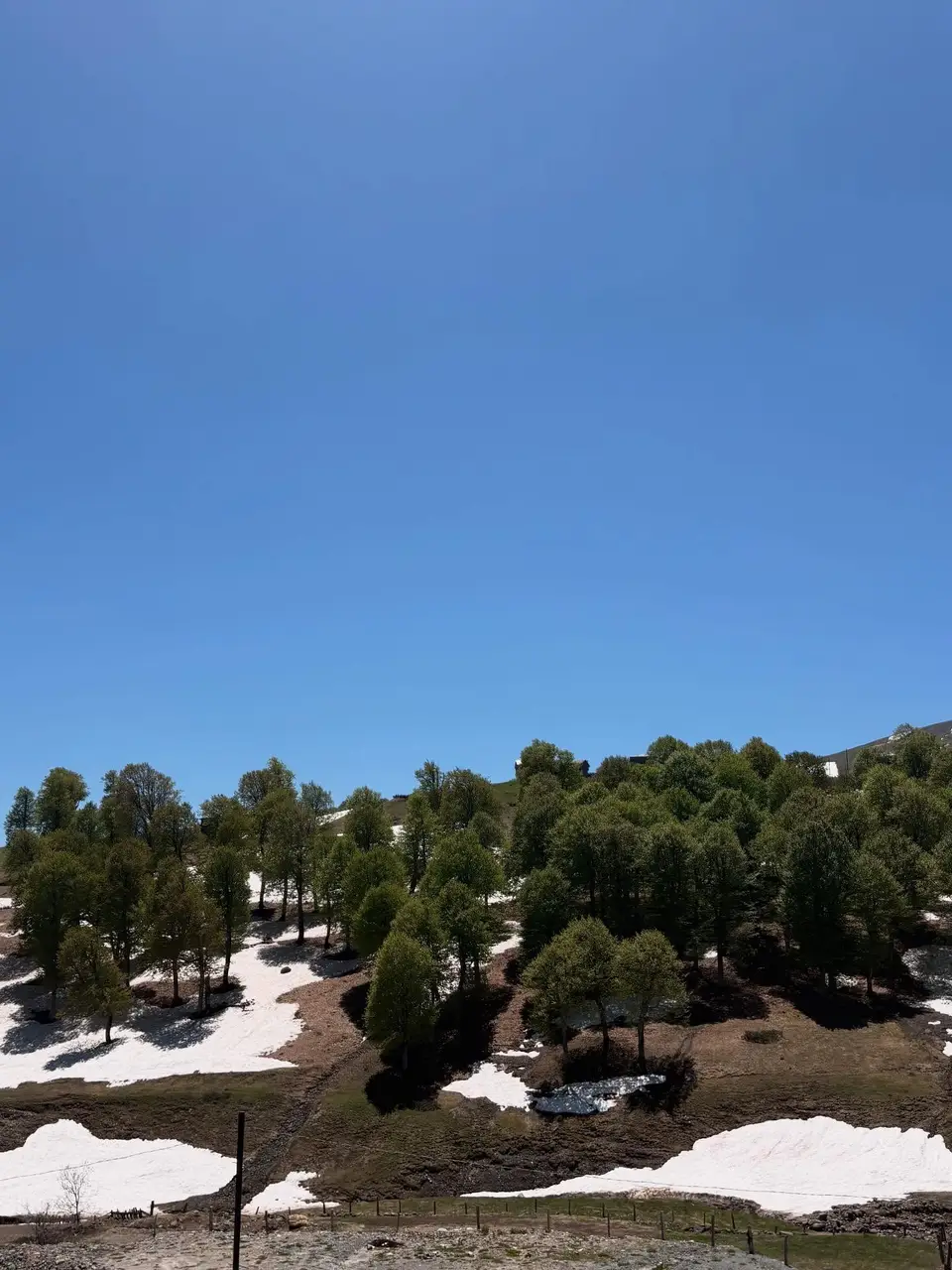
- Hats and sunglasses for everyone on day trips. Fresh snow reflects up to 80% of UV, which matters in April and on the patches of snow higher up around Goderdzi in spring.
- Babies under 6 months stay out of direct sun altogether (HealthyChildren.org).
How cold do nights get, and what should guests pack?
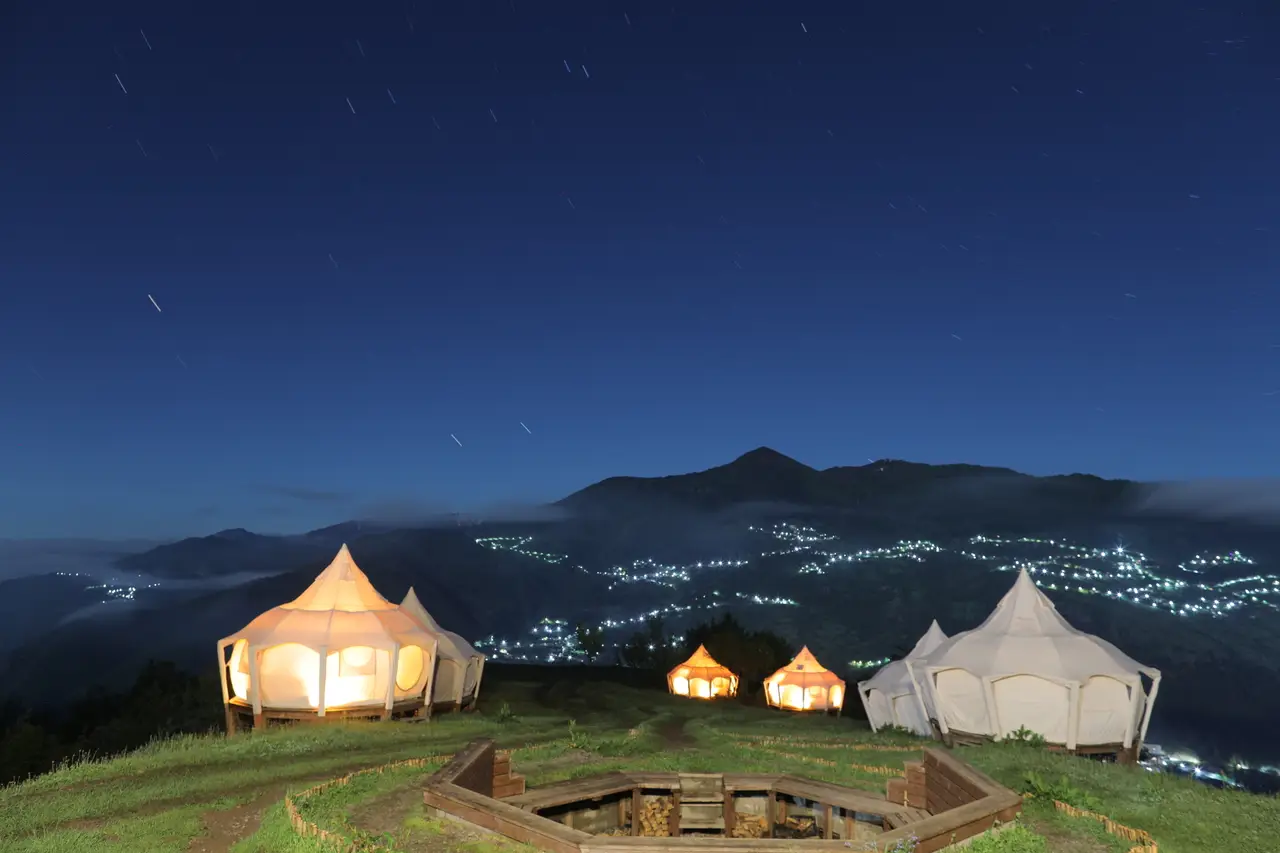
Colder than people expect. Days can be warm, but the camp loses its heat fast after sunset in every month of the season, and guests ask us about warm clothes more than about anything else.
| Month | Typical night at the camp | Pack |
|---|---|---|
| April | 2 to 4°C (days about 15°C) | Winter jacket, hat, gloves, warm sleepwear, rain jacket |
| May | 6 to 9°C | Warm jacket, hat, layers, rain jacket, boots |
| June | 11 to 13°C | Fleece or sweater, rain jacket, boots |
| July | About 15°C | Sweater for the evening, rain jacket |
| August | 15 to 17°C | Sweater for the evening, rain jacket |
| September | 10 to 13°C | Fleece, rain jacket, boots |
| October | 5 to 8°C (days about 18°C) | Warm jacket, hat, gloves for the campfire |
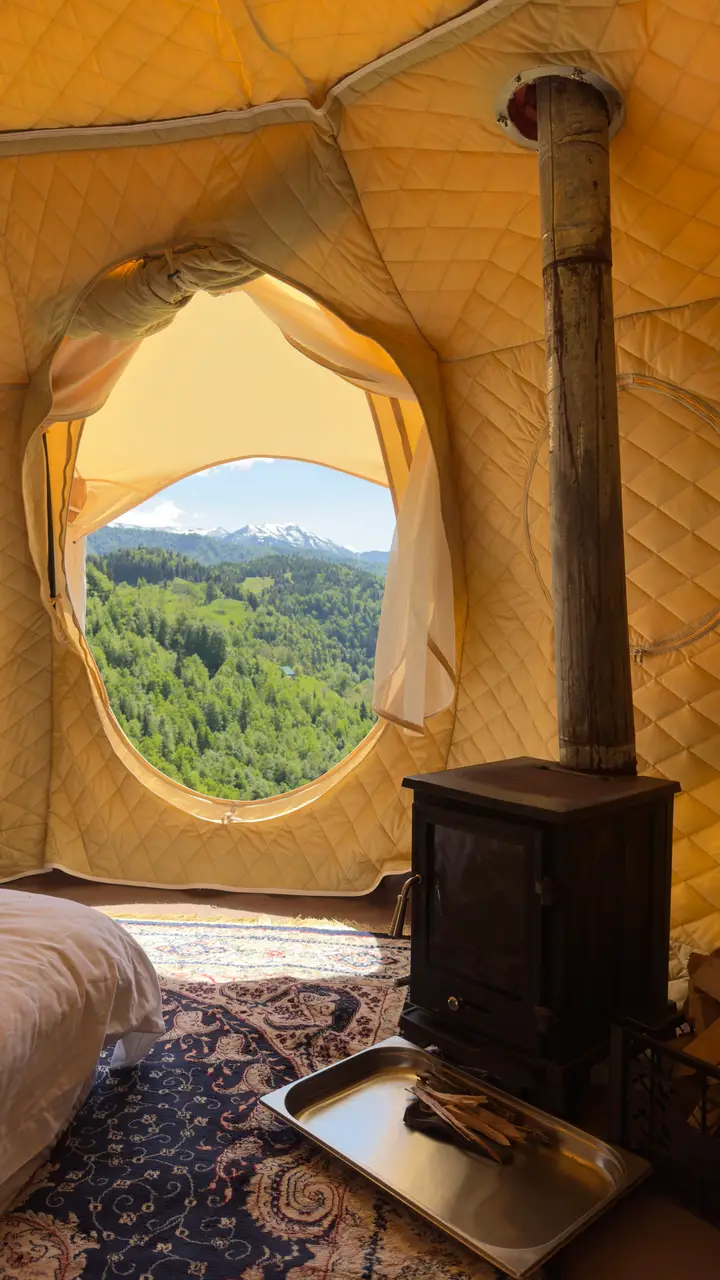
Rain falls on 11 to 16 days a month from April to October, so a rain jacket and shoes with grip belong in every bag. The tents are heated with a wood stove (wood included) and a gas heater.
Children are the group to watch. The UIAA points out that young children rarely say they are cold; they go quiet and still instead.
Does alcohol hit harder at a mountain wedding?
No. Blood alcohol is not higher at altitude: an Austrian study and US aviation research found the same levels, as Wine Traveler sums up. At 1,200 m, wine affects your guests exactly as it does at home.
What does change the evening is the rest of the day. Sun, a long drive and less water than usual all add up with the toasts. Put water jugs on every table (our tap water comes fresh from the mountains, so bottles can be refilled free), serve food with the first drinks and keep warm drinks going after dark.
Alcohol does matter on the higher day trips. The Cleveland Clinic and the MSD Manual both list alcohol and sleeping pills as things that raise the risk of altitude illness, so save the chacha for the evening back at the camp.
Which day trips go higher, and what changes there?
Three popular trips from the camp climb above 2,000 m: Khikhani Fortress, Green Lake and the Goderdzi pass. They are day trips; everyone sleeps back at 1,200 m, which the CDC says is much less stressful for the body than sleeping high.
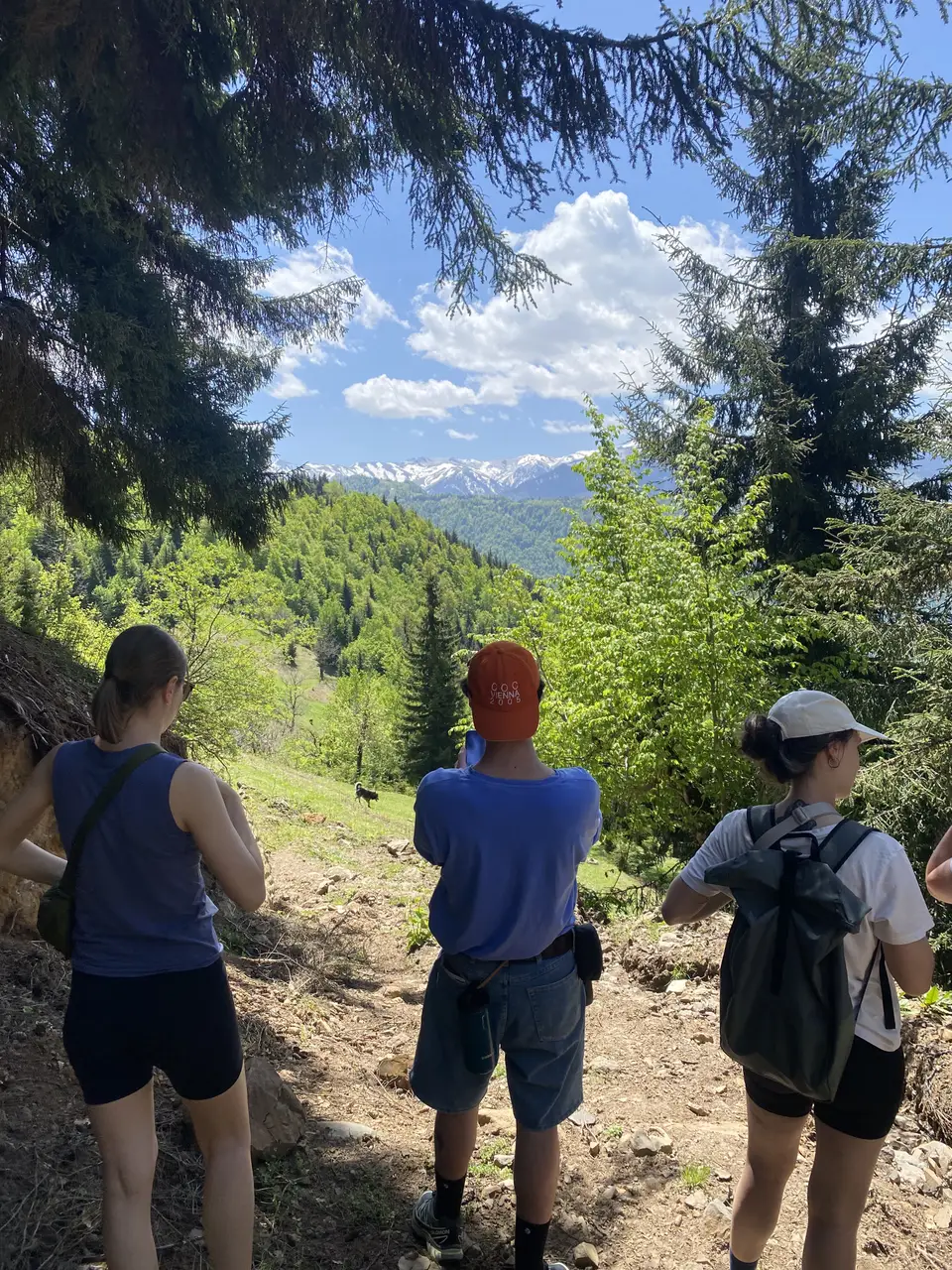
The road to Green Lake crosses the Goderdzi pass, so those two combine in one day; Khikhani is a separate trip on another road. Plan a long half day or a full day for each. Drink more than you think you need, carry a layer for the top, and if someone gets a pounding headache up there, the cure is simply driving back down.
Khikhani Fortress (about 2,200 m)
Where: above the Goderdzi to Chirukhi road, 36.4 km by road from the camp. Altitude: 2,236 m (Georgia Travel), about 1,000 m above where you sleep. The walk: the last kilometre is on foot, 400 to 500 m of climb on 14 metal staircases, one to three hours up (our Khikhani guide). Season: April to November, with the upper track dependable from June to mid-October.
This is the trip that needs real fitness and decent knees, and the Adjara tourism department advises people with heart or breathing problems against the climb. There is no water on the path, only a tap at the car park, so fill up there. The fortress is in a border zone: you need a free Border Police permit before you go (send your route and passport scans to bpol@mia.gov.ge about a week ahead), and everything above Khulo is paid in cash.
Green Lake (2,058 m)
Where: 6 km north of the Goderdzi pass, about 40 km by road from the camp over the pass. Altitude: 2,058 m (Travel Guide Georgia), about 870 m above the camp. The effort is small: you drive almost to the shore. Reviewers mention one thing again and again: the water is cold at any time of year. Our Green Lake guide has the road in detail.
Goderdzi pass and ski area (2,025 to 2,366 m)
Where: the pass is on the road from the camp to Green Lake; the ski area base sits 2.2 km off that road, so the two fit in one day. Altitude: the pass is at 2,025 m and the ski area runs from 1,724 to 2,366 m. You drive all the way up, so it is the easy way for older guests and families to see the high mountains.
Is a wedding at 1,200 m safe for older guests and guests with heart or lung conditions?
For most older guests, yes: the altitude itself is not the issue at 1,200 m. The things to plan for are the slope, the walk to the bathhouse at night, the cold and the distance to a hospital.
Guests who already have a heart or lung condition should talk to their own doctor before the trip; that is the standard advice from Healthdirect, and the CDC adds two practical steps for travellers with chronic illness: carry a short letter from the doctor listing the condition and medicines, and know where local care is before you need it. Asthma + Lung UK has a travel checklist for people with lung conditions.
For the organiser:
- Ask older guests for the tents closest to the restaurant and the bathhouse. The bathhouse is shared (two blocks, each with two showers and two toilets, hot water), so there is a short walk outside at night: a headlamp or phone torch helps.
- The camp is on a hillside and is not wheelchair accessible. Tell us in advance about anyone with limited mobility.
- Dehydration hits older adults, babies and children first (NHS). Water on every table, and someone who keeps refilling it.
- Bring enough of every regular medicine for the whole trip plus a few days. Antibiotics and many other medicines are prescription-only in Georgian pharmacies (Bebgur), and Khulo's pharmacies close in the evening.
Is a mountain retreat at 1,200 m safe for children and babies?
Yes for healthy children, and children of all ages are welcome at the camp. Children are as susceptible to altitude illness as adults, but 1,200 m is far below the 2,500 m ceiling Global Affairs Canada sets for children.
For babies, EvidenceNetwork advises keeping healthy infants older than one month and under one year below 1,500 to 2,000 m; the camp sits under that line. The higher day trips (Green Lake, Goderdzi, Khikhani) go above 2,000 m, so with a baby, keep them short or skip them.
The real risks for children at a mountain camp are the ones the CDC lists for child travellers everywhere: bites, sunburn, stomach upsets and road injuries. In practice:
- The drive. The road from Batumi winds for hours, and motion sickness peaks between the ages of 2 and 12. The NHS tips work: a front seat, eyes on the horizon, fresh air and a break on the way.
- Ears. Fast climbs by car can hurt little ears, worse with a blocked nose, so travel with a healthy child and skip the high trips during a cold.
- Signs to watch. Small children with altitude trouble or a fever do not say so: they lose their appetite, get irritable and look pale.
- Animals. Children are less likely to keep away from dogs or to report a bite (TravelHealthPro). Teach them to tell an adult about any lick, scratch or bite.
What should pregnant guests plan?
A trip to 1,200 m is an ordinary trip in pregnancy; plan it like any other trip abroad. ACOG says the middle of pregnancy, 14 to 28 weeks, is the best time to travel, with a check-up before an international trip.
The NHS adds two points that matter in the mountains: your insurance must cover pregnancy care, and you should carry your maternity notes. Khulo Clinic lists obstetrician-gynaecologists among its doctors. Skip the cold plunge and any breath-hold practice on a retreat programme.
Sauna, cold plunge and mountain water: who should skip it?
The wood-fired sauna tent is lit every evening from 20:00 to 22:00 and is free for staying guests, with a cold plunge next to it. Most healthy guests can use both; a few should check with their doctor first.
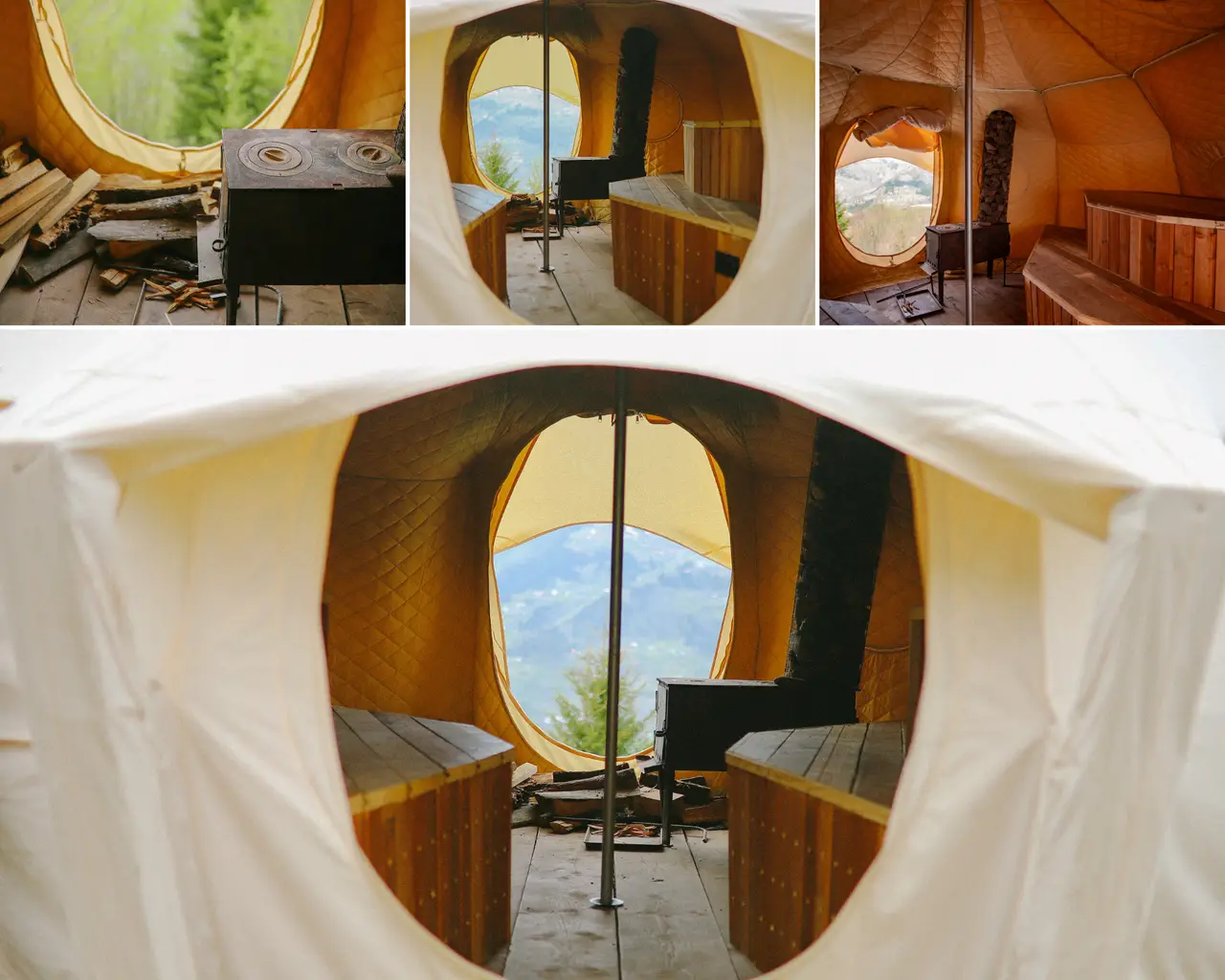
The Cleveland Clinic names the groups who should ask a doctor before a cold plunge: people with heart disease, high blood pressure, diabetes, neuropathy or poor circulation, and pregnant women. For first-timers it suggests water of 10 to 15°C for 1 to 2 minutes, never more than 5 minutes. Our sauna and cold plunge guide has the full routine.
On a retreat, the Oxygen Advantage safety guidelines rule out breath holds and exercises that cause air hunger in the first trimester of pregnancy, and rule out breath holds for children with epilepsy, severe asthma or diabetes. Adults with a heart condition or on regular medication should ask their doctor first.
Mountain streams look clean but are untreated. The CDC advises avoiding contaminated water in Georgia, and leptospirosis spreads through river or lake water that gets into the mouth, eyes or cuts (NHS). Fill your bottle from our tap, not from a stream, and keep cuts covered if you swim in a lake.
Dogs, ticks and insects: what should guests watch for?
Dogs are the one real risk to take seriously in Georgia. The CDC says rabid dogs are common in the country, and the UK classifies Georgia as high risk for rabies.
Two friendly camp dogs live at Glamping Tago. A tag in a street dog's ear shows it went through the neuter-and-vaccinate programme, but not that its rabies shot is current. After any bite, or any scratch that breaks the skin, from any dog:
- Wash the wound with soap and running water for at least 15 minutes, as the WHO advises.
- Get medical care the same day. The NHS is clear: abroad, do not wait until you are home.
- Rabies vaccine is available throughout most of Georgia (CDC). Khulo Clinic is the nearest 24-hour point of care, the Batumi hospital the nearest large one.
Ticks are the reason to check yourself after a hike through long grass. The CDC lists Crimean-Congo haemorrhagic fever, spread by ticks and livestock blood, in Georgia, and a Georgian study found Lyme bacteria in ticks. The ECDC routine works: long trousers tucked into socks on hikes, repellent on bare skin, a full body check after every hike and tweezers to pull a tick straight out. The CDC adds a repellent with DEET or picaridin and a shower within two hours of coming back. Check children's hair, daypacks and dogs too. A spreading red rash 3 to 30 days after a bite means a visit to a doctor (CDC).
Avoid unpasteurised milk and cheese: tick-borne encephalitis can also spread through raw dairy (NHS).
Mosquitoes show up sometimes; we keep repellent spray for guests.
Before the trip, the CDC recommends hepatitis A vaccination for unvaccinated travellers to Georgia aged one year or older, and routine vaccines, tetanus included, should be up to date.
Where is the nearest clinic, pharmacy and hospital to Glamping Tago?
The nearest 24-hour clinic is Khulo Clinic of the Georgian Clinics network, 9.3 km by road from the camp and right on the road back to Batumi. For anything serious, the main hospital is the Batumi Republican Clinical Hospital, about 90 km away.
In an emergency, call 112. It is free from any phone 24 hours a day and works without a SIM card (Georgia Travel) and with zero balance (Batumilife). It also covers mountain rescue, and the operators speak English (GTour). The ambulance is free; treatment in hospital is paid by you or your insurer. The Health Ministry hotline is 1505, also 24 hours.
Khulo Clinic (24 hours)
Where: Aghmashenebeli St 1, Khulo, about 250 m lower than the camp. From the camp: 9.3 km, 30 to 35 minutes down the 4x4 road. The clinic lists emergency medicine doctors, therapists, paediatricians, obstetrician-gynaecologists, a general surgeon, an anaesthesiologist and radiologists, with separate children's and adults' emergency care; it is open around the clock (2GIS) and the network's line is 16033.
Aversi pharmacy, Khulo
Where: 18 M. Abashidze St, Khulo centre, open daily from 09:00 to 21:00 (Yell.ge). Khulo's pharmacies close in the evening; in Batumi the big chains have branches open 24 hours. Khulo also has the shops and banks, so stock up and take cash there; at the camp you can pay by card, bank transfer or cash (FAQ).
Batumi Republican Clinical Hospital
Where: Tbel Abuseridze St 2 / Pushkin St 164, Batumi, open 24 hours. From the camp: about 90 km, 2.5 to 3 hours. This is where serious injuries and illnesses end up; its Google reviews are mixed (3.6), so treat it as the place for real emergencies, not a check-up.
What does health cover cost, and what is free?
Since 1 January 2026 every tourist in Georgia must have health and accident insurance covering at least 30,000 GEL for the whole stay (Polish embassy summary of Resolution No. 602). The policy can be paper or electronic, in Georgian or English, from a Georgian or a foreign insurer.
| Item | 2026 prices |
|---|---|
| 112 call and ambulance | Free |
| Hospital treatment | Paid by you or your insurer |
| Minimum insurance cover for tourists | 30,000 GEL for the whole stay |
| Our 4x4 taxi, Khulo to the camp | 75 GEL per car, up to 4 people, 30 to 35 minutes |
| Marshrutka Batumi to Khulo | About 10 GEL, every 30 minutes 08:00 to 20:00, about 2.5 hours |
| Drinking water at the camp | Tap water free; bottled 3 GEL for 0.5 l |
| Evening sauna and cold plunge | Free for staying guests |
The transport prices are on our how to get here page.
What should a retreat or wedding organiser plan for health?
Six things, done in the weeks before the trip, cover almost everything. Groups usually book the camp months ahead, so there is time.
- A short health form. Ask every guest for allergies, regular medicines, conditions you should know about (heart, lungs, diabetes, epilepsy, pregnancy) and an emergency contact. Keep it private and bring it.
- Insurance for everyone. At least 30,000 GEL of cover, with pregnancy care for pregnant guests. Ask guests to keep the policy on their phone.
- Medicines and a kit. Guests bring their own medicines for the whole trip. We keep a first-aid kit for guests; bring your own blister plasters, sunscreen, after-sun, rehydration salts, antihistamines and painkillers for a group.
- Signal and numbers. Magti has the best mobile signal at the camp, and Wi-Fi is Starlink. Put 112, 1505 and the address of Khulo Clinic in the group chat.
- Transport for a bad day. The last road needs a 4x4, so guests without one park in Khulo centre and take our 4x4 taxi (75 GEL per car, no fixed hours). Agree in advance who drives if someone needs the clinic at night.
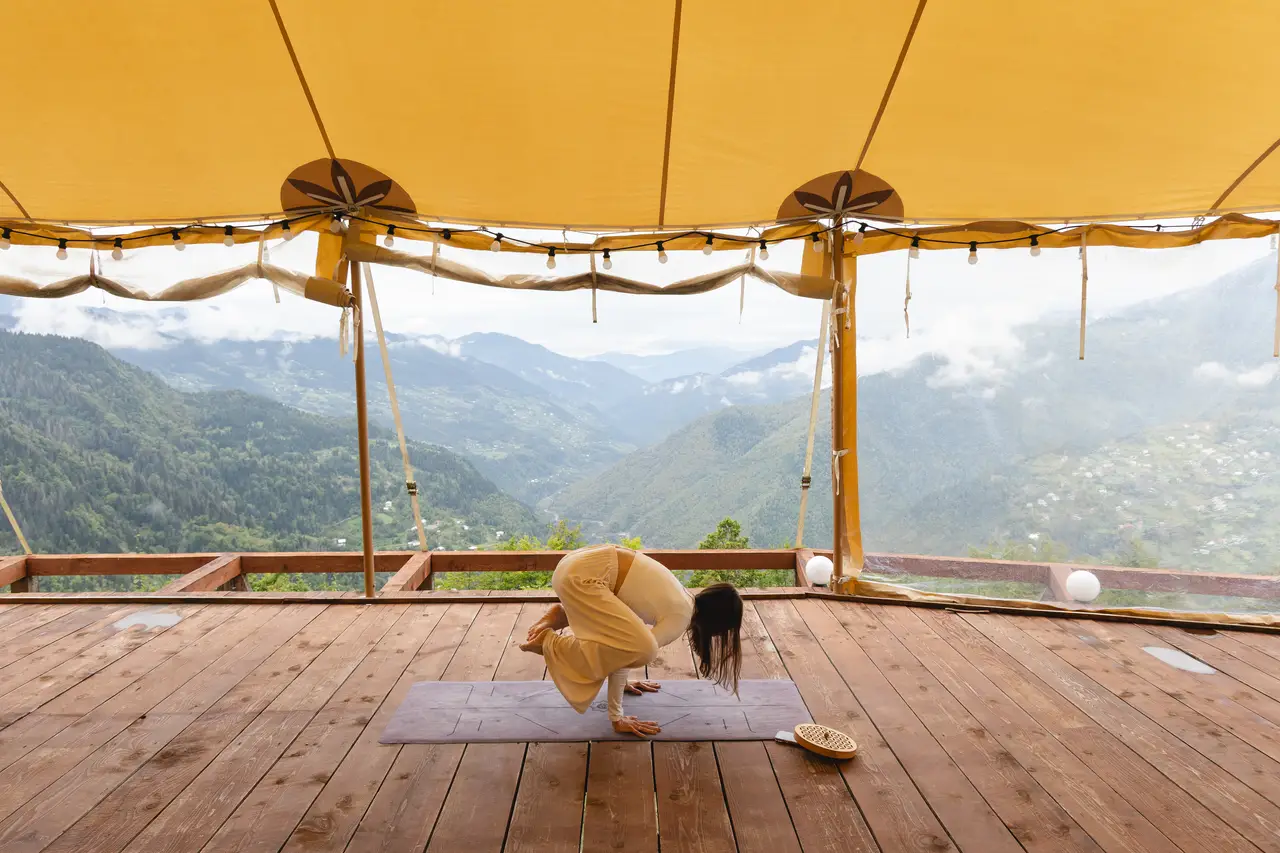
- A sun-and-cold schedule. Outdoor ceremony or sessions before 11:00 or after 15:00, a hike in the morning, sauna in the evening, warm layers and tea by the campfire after dark.
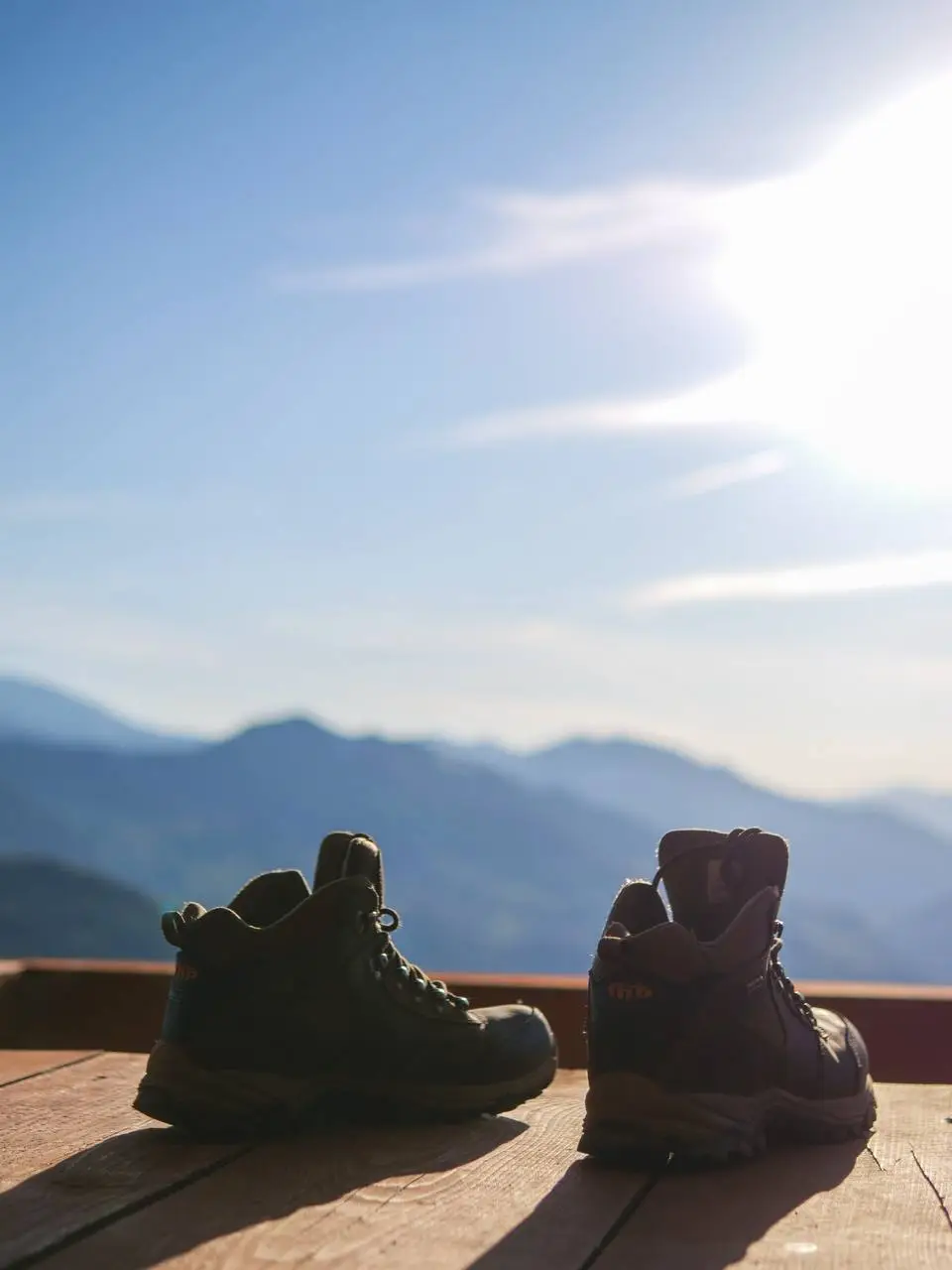
For hikes from the camp itself, our hiking retreat guide lists the trails, and the retreats page has what a group buyout includes. Planning a wedding? Start on wedding.glampingtago.ge.
Glamping Tago for this
A mountain retreat or wedding at 1,200 m with Glamping Tago
We are Jonas and Lisa, a Belgian couple who fell in love with Georgia and opened Glamping Tago in 2021. The camp is built for weddings of about 30 guests and retreats of up to 30: the whole ridge belongs to your group, and everyone sleeps on site, at an altitude that suits grandparents and toddlers alike.
Tents are heated with a wood stove and a gas heater, the sauna is lit every evening and is free, meals are in Yurtalicious, our vegetarian yurt restaurant, and Khulo Clinic is 9.3 km down the road. Tell us about guests with special health needs when you book and we plan tents and the programme around them.
- Altitude
- About 1,200 m, above Village Tago in Khulo
- Group size
- 12 to 33 guests, the whole camp for one group
- Beds on site
- 33: 12 heated tents for two and a nine-bed dorm
- Season
- Early April to the end of October
- Drive from Batumi
- 2.5 to 3 hours: 85 km of asphalt to Khulo, then 30 to 35 minutes by 4x4
- Nearest 24-hour clinic
- Khulo Clinic, 9.3 km
- Sauna and cold plunge
- Every evening 20:00 to 22:00, free for staying guests
- Connection
- Starlink Wi-Fi; Magti has the best mobile signal
Questions people ask
Can you get altitude sickness at 1,200 metres?
Almost never. Altitude sickness usually starts above 2,500 m, the UK counts "high altitude" only from 1,500 m, and most people can go to 1,500 to 2,000 m in a single day without problems. A headache on the first evening at 1,200 m is far more likely to come from the drive, the sun or too little water.
Is a mountain wedding at 1,200 m safe for older guests?
Yes for most older guests: the altitude is not the issue. Plan for the slope, a short walk to the shared bathhouse at night, cold evenings and the 9.3 km to Khulo Clinic. Guests with heart or lung conditions should see their own doctor before the trip and carry a letter listing their conditions and medicines.
Is 1,200 m safe for babies and young children?
Yes for healthy children. Guidance keeps healthy babies over one month below 1,500 to 2,000 m and children below 2,500 m, so the camp is under both lines. The higher day trips to Green Lake, Goderdzi and Khikhani go above 2,000 m, so keep those short with a baby, and keep babies under 6 months out of direct sun.
Does alcohol hit harder at altitude?
No. Blood alcohol is not higher at altitude, and at 1,200 m wine works as it does at home. Sun, a long drive and too little water make the evening feel stronger, so put water on every table. Never give alcohol to someone who is cold; give a warm, non-alcoholic drink instead.
Where is the nearest hospital to Khulo in Adjara?
Khulo Clinic of the Georgian Clinics network, on Aghmashenebeli St 1 in Khulo, is open 24 hours and is 9.3 km from Glamping Tago. The main hospital is the Batumi Republican Clinical Hospital, about 90 km away. Call 112 for an ambulance: it is free and the operators speak English.
Is there a pharmacy near Glamping Tago?
Yes. Aversi in Khulo centre is open daily from 09:00 to 21:00, about 9 km by road from the camp. Pharmacies in Khulo close in the evening and antibiotics are prescription-only in Georgia, so bring your regular medicines for the whole trip.
What should I pack for a retreat in the Adjara mountains?
A warm layer for every evening (nights drop to 2 to 4°C in April, 5 to 8°C in October and about 15°C in July), a rain jacket, hiking boots with grip, SPF 30+ sunscreen, a hat and sunglasses, a refillable bottle and a headlamp for the walk to the bathhouse. Add your own medicines, blister plasters and insect repellent.
Do I need travel insurance to visit Georgia in 2026?
Yes. Since 1 January 2026 tourists must have health and accident insurance with at least 30,000 GEL of cover for the whole stay, on paper or electronically, in Georgian or English. Pregnant guests need a policy that covers pregnancy care.
Glamping Tago
Planning something in the mountains?
Tell us the dates and the number of people. We answer within a day, with a real price, not a brochure.